
Arizona Shutter Buying Guide
What Are the Best Plantation Shutters for Arizona?
The best plantation shutter for Arizona is not automatically the most recognizable brand, the most expensive product or the lowest-priced option.
The better question is: What do you want the shutter to do, and which type of shutter is engineered to keep doing it in Arizona heat, dryness and constant sunlight?
For most homeowners, the answer is straightforward:
If you want a white shutter, we recommend a high-quality engineered poly shutter. If you want a genuine stained-wood appearance, we recommend a highly engineered wood shutter.
What Is the Best Plantation Shutter for Arizona?
For most Arizona homeowners who want a white shutter, we recommend a solid engineered poly shutter with aluminum-reinforced louvers, rails and stiles and a machine-applied, baked-on, UV-cured finish.
When a homeowner wants genuine stained wood, we recommend a highly engineered wood shutter from a manufacturer with strict controls over lumber selection, moisture content, construction and finishing.
The best shutter is not determined by a brand name alone. It is determined by the base material, finish, reinforcement, components, installation and warranty.
| What the homeowner wants | Recommended shutter type | Why |
|---|---|---|
| White, low-maintenance shutters | Solid engineered poly | Best combination of climate stability, finish consistency, reinforcement and low maintenance |
| Genuine stained wood | Highly engineered wood | Provides authentic grain, depth and natural variation that poly cannot duplicate |
| Lowest initial price | MDF or hollow vinyl may cost less | Lower initial cost can come with a greater risk of yellowing, delamination or component failure |
| A long-term, one-time purchase | Engineered poly for most white applications | Avoids many of the predictable problems seen with ordinary painted wood, MDF and hollow vinyl |
The best material depends partly on the finish you want. For white shutters, engineered poly is usually the stronger long-term choice. For genuine stain, highly engineered wood remains the right material.
What We Have Learned From Installing Thousands of Shutters in Arizona
Our recommendations are not based only on manufacturer brochures or showroom samples.
They are based on more than two decades of installing, owning, inspecting and servicing shutters in Arizona homes.
We have installed thousands of high-quality engineered poly shutters. In our experience, we have not seen them routinely turn yellow, warp at the window, develop peeling finishes or experience widespread panel failure.
The problems we have encountered have primarily involved accidental damage or a rare isolated louver where the underlying material had a defect.
No manufactured product is perfect. An isolated defect can happen.
The important difference is whether a problem is rare and isolated or whether it becomes a repeated pattern throughout the home.
With other shutter categories, we have repeatedly encountered more predictable issues:
- Hollow vinyl shutters that turned yellow
- Plastic components that became brittle
- MDF shutters that delaminated
- Wood louvers that warped
- Wood panels that twisted or moved
- Wood tilt rods that warped
- Painted finishes that cracked or peeled
- Poor sanding and surface preparation
- Dust trapped beneath painted finishes
- Inconsistent paint coverage
- Shutters that left the shop without the level of finish expected from a premium custom product
This does not mean every shutter made from wood, MDF or vinyl will experience the same problem.
It means these are patterns we have personally encountered in Arizona homes.
That field experience shapes the standards we use when selecting the shutters we are willing to install.
Why Arizona Is Hard on Plantation Shutters
A plantation shutter installed in Arizona lives in a demanding environment.
On one side of the shutter, there is intense sunlight, UV exposure and heat entering through the glass.
On the other side, there is a climate-controlled, air-conditioned room.
That creates two very different conditions inside the same shutter.
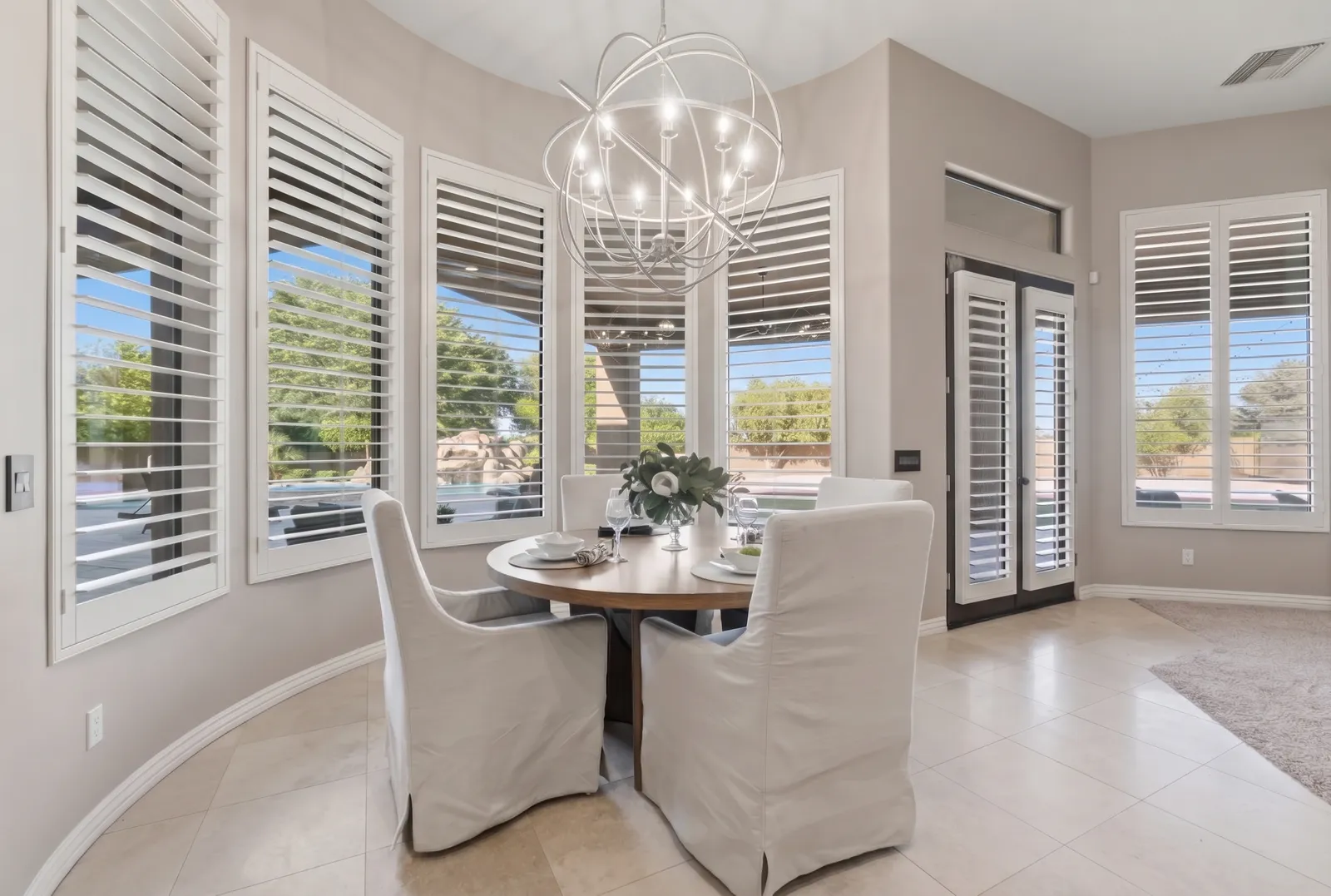
The side facing the glass can become extremely hot, especially on west-facing and south-facing windows. Heat builds up in the narrow space between the window and the shutter.
Meanwhile, the room-facing side remains cooler and dry.
Most homeowners also tilt their louvers upward for privacy and light control. That means one side of each louver may receive significantly more sunlight and heat than the other side.
Over time, that difference in exposure puts stress on:
- The base material
- The surface finish
- The louvers
- The panel structure
- Magnets
- Tension systems
- Hinges
- Connectors
Arizona is also extremely dry.
Materials that respond poorly to prolonged heat, dryness and UV exposure may eventually dry out, crack, warp, become brittle, yellow, peel, delaminate, lose tension or lose their shape.
You can see the effects of the Arizona climate throughout the exterior of a home. Wood fascia, gates, outdoor furniture, painted trim and other materials exposed to the sun eventually fade, dry out, crack or need refinishing.
A plantation shutter receives some protection from the glass, but it is still installed directly in one of the hottest and most sun-exposed areas of the home.
The glass can reflect some UV light, but it also creates a confined area where heat becomes trapped between the window and the shutter.
That is why a shutter that performs adequately in a mild climate may not be the best shutter for Arizona.
The Five Requirements of a Long-Lasting Arizona Shutter
A shutter should be evaluated as a complete system.
| Requirement | Why it matters in Arizona | What to look for |
|---|---|---|
| Stable base material | The shutter is exposed to heat on one side and air conditioning on the other | A material that resists warping, cracking, shrinking and climate-related movement |
| Engineered finish | Constant sunlight and trapped heat attack the surface | A finish designed to resist yellowing, fading, peeling and separation |
| Internal reinforcement | Wide louvers and large panels can sag, twist or lose alignment | Reinforcement inside the louvers, rails and stiles |
| Durable components | Magnets and tension systems sit directly in a hot window environment | Parts designed to resist brittleness, stripping and repeated failure |
| Meaningful warranty and service | Even premium products can have an isolated defect | Coverage for material, finish, components and legitimate manufacturing failures |
A shutter can have a stable material and still fail because the finish is weak.
It can have a beautiful finish and still fail because the panel lacks reinforcement.
It can have a strong panel and still become frustrating because inexpensive magnets break or the louvers lose tension.
The best shutter is not one impressive feature.
It is a complete system in which the material, finish, structure, components, installation and warranty all work together.
Arizona Plantation Shutter Materials Compared
| Shutter type | Base construction | Surface system | Common concern we have encountered | Best application |
|---|---|---|---|---|
| Engineered poly | Solid synthetic material with internal reinforcement | Machine-applied, baked-on, UV-cured finish | Rare isolated defect or accidental damage | White shutters intended to be low maintenance |
| Highly engineered wood | Selected and controlled natural wood components | Stain, sealer and protective topcoat | Natural material movement remains possible | Genuine stained-wood appearance |
| Basic painted wood | Natural wood with variable reinforcement | Sprayed and hand-finished paint, commonly air dried | Warped components, cracked or peeling finishes and workmanship variation | Specialty applications after carefully evaluating the manufacturer |
| MDF | Compressed wood-fiber core | Laminated or vinyl outer wrap | Delamination, bubbling and surface separation | Budget-driven painted appearance |
| Hollow vinyl | Hollow vinyl extrusion | Pigment or dye incorporated into the material | Yellowing, brittleness and inexpensive component failure | Entry-level applications |
Why We Recommend Engineered Poly for White Shutters
For most Arizona homeowners who want white shutters, we recommend a high-quality engineered poly product.
Once wood is completely covered with white paint, the homeowner no longer receives its primary visual benefit: the depth and natural variation of visible wood grain.
The homeowner still accepts the characteristics of a natural material, including the possibility of movement, drying, cracking and finish variation.
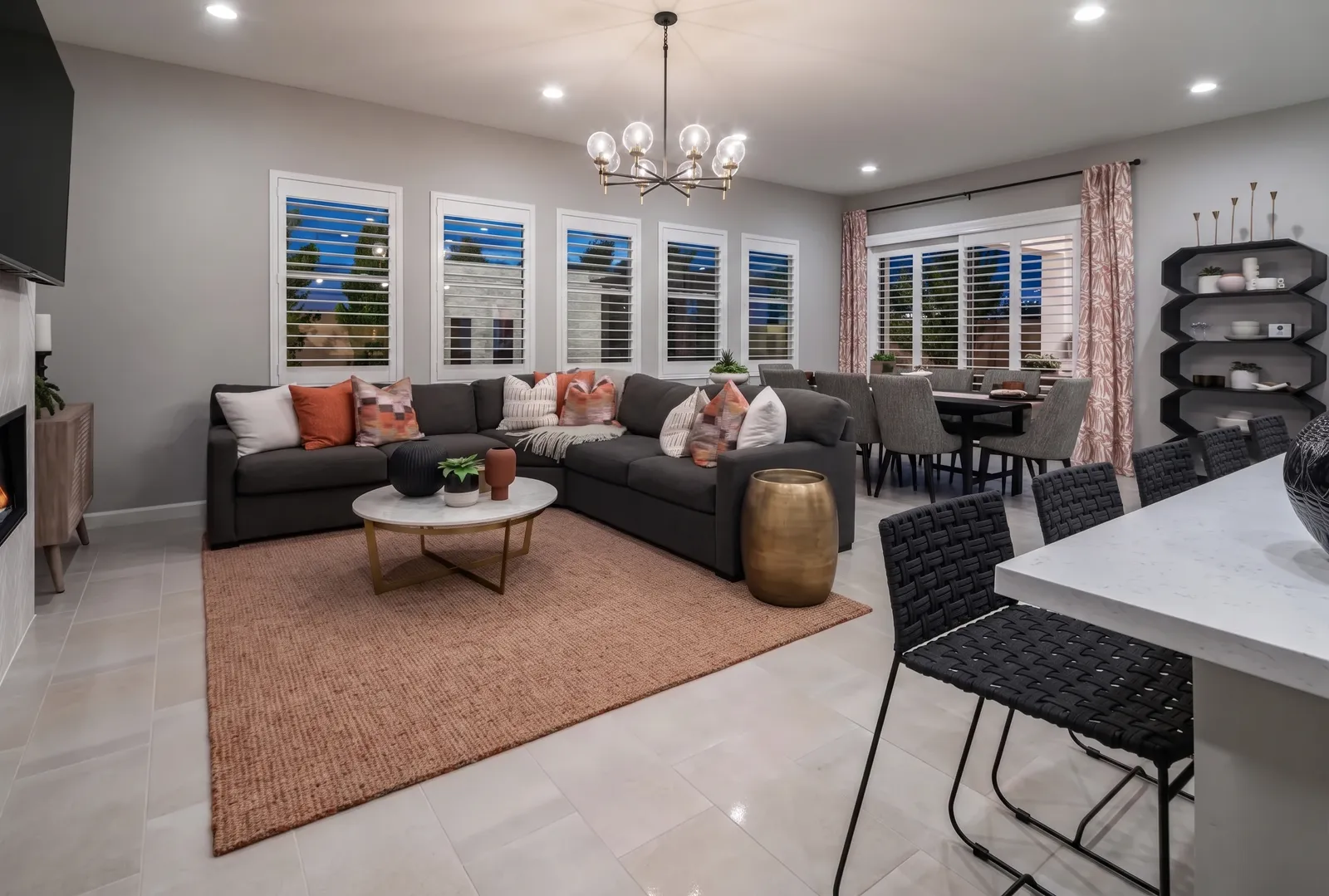
A properly engineered poly shutter can provide the same clean white appearance with:
- Greater climate stability
- More consistent finishing
- Lower maintenance
- Better resistance to warping
- Better resistance to cracking
- No laminated surface wrap
- No need for repainting or refinishing
- More controlled manufacturing
- Internal aluminum reinforcement
The best engineered poly shutters include:
- A stable solid poly base material
- Aluminum I-beam reinforcement inside the louvers
- Aluminum-reinforced rails
- Aluminum-reinforced stiles
- A machine-applied waterborne finish
- A baked-on and UV-cured coating
- Durable magnets and hardware
- A dependable louver-tension system
- Strong warranty protection
A stable material combined with internal aluminum reinforcement creates a much stronger system than relying on the visible surface material alone.
For a homeowner who wants a white, long-lasting and low-maintenance shutter, engineered poly is generally the best fit for Arizona.
When Wood Shutters Are the Right Choice
Wood is not automatically a poor shutter material.
There is a major difference between a basic painted wood shutter and a highly engineered premium wood shutter.
A high-quality engineered wood shutter may include:
- Carefully selected lumber
- Kiln-dried wood
- Strict moisture-content standards
- Laminated or engineered components
- Reinforced rails and stiles
- Controlled machining
- Advanced stain and sealer systems
- Protective topcoats
- Tight manufacturing tolerances
- Multiple quality-control inspections
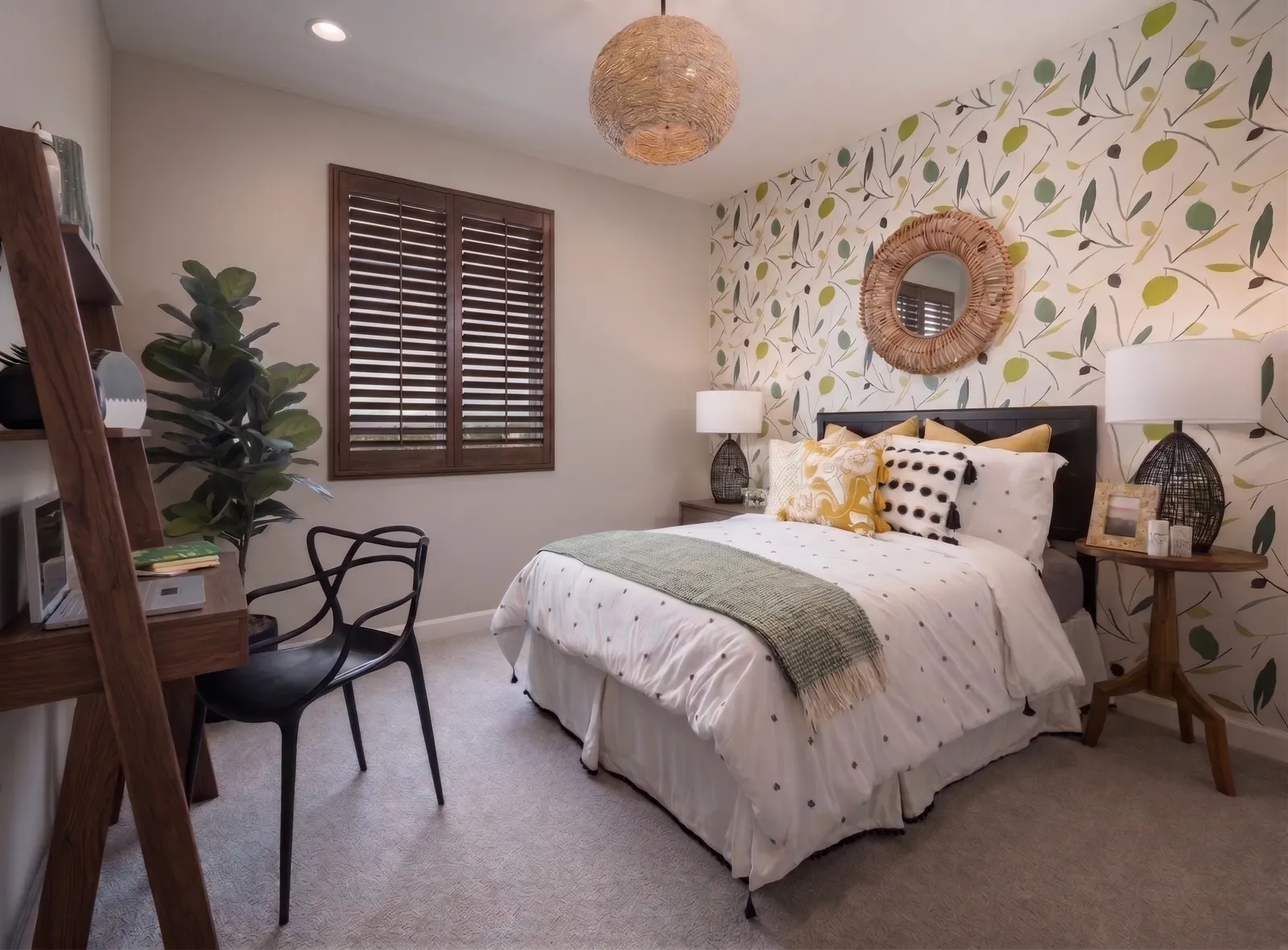
We recommend engineered wood when the homeowner wants a genuine stained-wood appearance.
Stain allows the grain, depth, character and natural variation of the wood to remain visible.
That is something poly cannot completely reproduce.
For that reason, wood should be treated as a premium design choice rather than the default material for every plantation shutter.
Our recommendation is simple:
White shutters: engineered poly.
Stained shutters: highly engineered wood.
Why We Usually Do Not Recommend Painted Wood
When a homeowner wants a white shutter, painted wood often introduces more risk without creating a meaningful design advantage.
Wood is a natural material. It can react to heat, dryness and environmental changes.
Painted wood also depends heavily on the quality of raw lumber, moisture control, sanding, dust removal, primer, paint, spray application, hand touch-ups, drying conditions and final inspection.
A premium wood manufacturer can produce an excellent finish.
The challenge is that the process involves more variables, and the finished quality can vary significantly between manufacturers.
It may even vary between different components produced by the same shop.
For a white shutter, a highly controlled poly finishing process usually creates a more consistent product with fewer long-term maintenance concerns.
For most Arizona homeowners who want a white shutter, the best choice is a solid engineered poly shutter with internal aluminum reinforcement and a machine-applied, baked-on, UV-cured finish. When genuine stained wood is the goal, a highly engineered wood shutter is the better choice.
The Finish Is Only as Good as the Way It Is Applied
Many homeowners compare shutter materials but overlook how the finish is attached to the surface.
That is a mistake.
The finish is only as durable as the way the surface was prepared, the coating that was used, the way the finish was applied, the way it adheres to the material and the way it was dried or cured.
Two shutters can look nearly identical when they are new but be manufactured through completely different processes.
Those differences can determine whether the shutter still looks beautiful years later or eventually begins to yellow, crack, peel, bubble or delaminate.
How Plantation-Shutter Finishes Are Made
| Shutter type | Surface or finish method | Curing or bonding method | Primary long-term concern |
|---|---|---|---|
| Engineered poly | Waterborne finish machine sprayed in a controlled conveyor system | Baked on and cured to the material in a UV oven | Quality varies by manufacturer, but routine finish failure should be uncommon |
| Engineered stained wood | Stain, sealer and protective topcoats applied to prepared wood | Controlled drying and curing | Natural movement of the wood and preparation quality |
| Basic painted wood | Spray-gun application with hand painting and touch-up | Commonly air dried | Inconsistent sanding, dust contamination, paint variation, cracking and peeling |
| MDF | Laminated or vinyl wrap adhered over the core | Adhesive bonding | Delamination, bubbling, peeling and surface separation |
| Hollow vinyl | Pigment or dye incorporated into the vinyl material | Material cools and sets during manufacturing | UV degradation, yellowing, chalking and brittleness |
How Engineered Poly Shutters Are Finished
A high-quality engineered poly shutter uses a controlled factory finishing process.
A waterborne coating is applied by machine while the shutter components travel through a conveyor-based production system.
That allows the manufacturer to more tightly control spray coverage, coating thickness, application speed, finish consistency, surface quality and curing conditions.
The finish is then baked on and cured to the material in a UV oven.
That is fundamentally different from spraying ordinary paint onto a surface and allowing it to air dry.
The UV-curing process creates a smooth, consistent finish that is bonded to the underlying material.
The result is more uniform coverage, better consistency between components, less variation from individual workmanship, strong adhesion, better resistance to discoloration, better durability under prolonged sunlight and a smoother showroom-quality appearance.
Not every poly shutter uses the same formula or finishing process.
The word "poly" alone does not guarantee quality.
Homeowners should ask how the finish is applied, how it is cured and what the warranty covers.
How Painted Wood Shutters Are Finished
Wood shutters are commonly painted with a spray gun inside a paint booth.
Some portions may be sprayed, while edges, details and touch-ups may be completed by hand.
The final quality depends heavily on the preparation and workmanship completed before the paint reaches the shutter.
Important variables include the quality of the raw wood, moisture content, sanding quality, whether imperfections were properly filled, whether dust was fully removed, primer quality, paint quality, spray-gun settings, thickness and consistency of each coat, temperature and humidity, hand-painted touch-ups and final inspection standards.
A small amount of dust left on the surface can become trapped beneath the paint.
Poor sanding can remain visible through the finish.
Inadequate preparation can lead to poor adhesion.
Uneven paint application can create differences in sheen, texture and coverage.
The paint is then generally left to air dry.
A well-run wood-shutter manufacturer can produce a beautiful product. But painted wood remains more dependent on preparation, individual craftsmanship and quality control.
Why MDF Shutters Can Delaminate
MDF is made from wood fibers combined with resins and compressed into an engineered core.
Many MDF shutters use a laminated or vinyl wrap applied over the surface.
The wrap can create a smooth, consistent appearance when the shutter is new.
The concern is that the finish is a separate outer layer held to the core by adhesive.
Over time, prolonged heat, moisture, surface damage or adhesive failure can cause the wrap to bubble, lift, peel, separate or delaminate.
Once the surface begins separating from the core, it is generally not something that can be corrected with a simple paint touch-up.
The damaged component often needs to be replaced.
We have seen many MDF shutters delaminate over time.
Why Hollow Vinyl Shutters Can Turn Yellow
Hollow vinyl shutters generally do not receive a separate furniture-quality painted finish.
Instead, dye or pigment is incorporated into the vinyl during manufacturing.
Although the color runs through the material, the vinyl itself remains exposed to prolonged heat and UV degradation.
In Arizona homes, we have seen countless hollow vinyl shutters gradually turn yellow.
We have also seen plastic and vinyl components become brittle after years at the window.
Many hollow vinyl shutters are designed around a lower price point and may also use hollow extrusions, lightweight construction, limited reinforcement, inexpensive connectors, plastic magnets and lower-cost tension systems.
That does not mean every hollow vinyl shutter will fail.
It means the homeowner should understand the tradeoffs behind the lower initial price.
Why Internal Aluminum Reinforcement Matters
A shutter panel is made from several structural components: louvers, stiles, top rails, bottom rails, divider rails and frames.
The visible material alone does not determine whether those components remain straight.
Internal reinforcement plays a major role.
Aluminum I-Beam Reinforcement Inside the Louvers
Wide louvers create more leverage and carry more stress than narrow louvers.
An aluminum I-beam inside the louver acts as a structural spine.
It helps the louver resist sagging, bowing, twisting, heat-related movement and long-term loss of alignment.
Aluminum-Reinforced Rails
The rails span the width of the panel.
Reinforcing them helps the shutter maintain its shape across larger widths.
Aluminum-Reinforced Stiles
The stiles run vertically along the sides of the panel.
Reinforced stiles help the shutter remain straight, square and stable, especially on taller panels.
A shutter that combines a stable poly material with reinforced louvers, rails and stiles is built differently from a shutter that relies only on its surface material for strength.
Small Parts Can Create Large Problems
Many shutters do not fail because the main panel breaks.
They fail because a small, inexpensive component wears out.
A shutter may contain magnets, catches, hinges, tension screws, pins, connectors, tilt-rod staples, nylon components and plastic housings.
Homeowners rarely focus on these details during a sales presentation, but they matter.
Plastic Magnets and Catches
One common example is the magnet used to hold the shutter panel closed.
Some shutters use a basic plastic high-rise magnet or catch similar to something available at a hardware store.
The magnet may work properly when it is new, but the plastic housing sits directly beside a hot, sun-exposed window.
Over time, the housing can become brittle, crack and release the magnet.
One broken magnet may seem minor.
But a home with 20 shutter panels may contain 40, 50 or 60 magnets.
If the manufacturer chooses a component that is not suited to prolonged window heat, the homeowner may eventually experience repeated failures throughout the house.
A permanent home improvement should not be built with disposable parts.
Louver-Tension Systems
The tension system determines whether the louvers stay in the position where the homeowner places them.
Lower-quality systems may loosen, strip or lose tension over time.
When that happens, the louvers begin drifting downward instead of remaining straight.
A strong tension system should hold the louvers consistently, be adjustable, avoid weak plastic components, remain serviceable and be covered by the warranty.
Loose louvers are frustrating because they affect the daily appearance and use of the shutter.
Manufacturing Sophistication Matters
Plantation shutters may look simple, but producing a premium shutter consistently requires sophisticated manufacturing.
A manufacturer needs control over raw material consistency, moisture content, component dimensions, cutting accuracy, reinforcement placement, sanding, dust removal, finish application, coating thickness, curing conditions, assembly tolerances, hardware quality, final inspection, packaging and transportation.
The challenge is not producing one attractive shutter.
The challenge is producing every louver, rail, stile, frame and panel to the same standard across thousands of orders.
Local or Handmade Does Not Automatically Mean Better
Some smaller shutter manufacturers produce excellent work.
However, smaller operations often rely more heavily on manual preparation, individual skill and hand finishing.
That creates more opportunities for variation.
The final product may depend on who selected the wood, who cut the components, who sanded the shutter, whether the surface was fully cleaned, who operated the paint gun, the quality of the paint, how long the product was allowed to dry, who completed the touch-ups and how closely the finished product was inspected.
A local or handmade product is not automatically better.
Those descriptions may sound premium, but they do not guarantee controlled manufacturing, tight tolerances, sophisticated finishing or consistent quality.
The actual process matters more than the marketing phrase.
A Major Brand Name Does Not Automatically Mean a Better Shutter
Some of the largest names in window coverings built their businesses primarily around blinds and shades before adding shutters as another product category.
A recognizable name may provide strong marketing, broad distribution and a large dealer network.
That does not automatically mean shutters are the company's primary engineering specialty.
The same principle applies to local manufacturers.
The homeowner should evaluate the actual shutter - not the size or familiarity of the company name.
The important questions are:
- What is the shutter made from?
- Is the material solid or hollow?
- How are the louvers reinforced?
- How are the rails and stiles reinforced?
- How is the finish applied?
- How does the finish adhere to the material?
- Is the finish air dried, baked or UV cured?
- What magnets and hardware are used?
- How is louver tension maintained?
- What problems does the warranty cover?
- Who provides service after installation?
The best shutter is the one with the strongest answers to those questions.
Installation Is Part of the Product
Even the best plantation shutter can perform poorly if it is measured or installed incorrectly.
Shutters need to be properly sized, installed square, installed level, correctly supported, adjusted for smooth operation, spaced evenly and secured without twisting the frame.
We prefer installing shutter frames with screws rather than simply shooting finish nails through the face of the frame.
Screws provide:
- Stronger long-term holding power
- More precise adjustment
- Easier alignment
- Easier removal
- Easier reinstallation
- Better access if the window needs repair
- Less damage if the room is repainted or remodeled
Nails are fast.
But speed should not be the primary goal when installing a product intended to remain in the home for decades.
You can read more about how our own measure-and-install process works.
What a Strong Shutter Warranty Should Cover
Many shutters are advertised with a lifetime warranty.
But lifetime warranties vary significantly.
A homeowner should ask:
- Is yellowing covered?
- Is warping covered?
- Is the finish covered?
- Is delamination covered?
- Are louvers covered?
- Are magnets covered?
- Are tension components covered?
- Are replacement parts covered?
- Is labor included?
- Are service calls included?
- Who handles the warranty claim?
- Does the local dealer provide the service?
- Are there exclusions for heat or sun exposure?
- Is the warranty transferable?
A warranty is only useful when it covers the problems that are likely to occur.
It is also only useful when there is a company willing and able to provide local service.
We wrote a full guide on this: the truth about shutter warranties in Arizona.
How to Compare Plantation Shutters Before You Buy
Before comparing prices, compare the construction.
Ask What the Shutter Is Actually Made From
Do not settle for broad marketing terms such as composite, polymer, faux wood, engineered material or wood-based product.
Ask what the actual core material is.
Ask Whether the Shutter Is Solid or Hollow
A hollow shutter and a solid reinforced shutter may both be described as synthetic.
They are not the same product.
Ask How the Finish Is Attached
Is the surface painted, stained, laminated, wrapped, pigmented, baked on or UV cured?
The finish method matters.
Ask How the Shutter Is Reinforced
Ask specifically about louver reinforcement, rail reinforcement, stile reinforcement, maximum panel dimensions and maximum louver span.
Ask About the Magnets
Find out what material the magnet housing is made from and whether it is designed for prolonged heat exposure.
Ask How Louver Tension Works
Ask whether the system is adjustable, repairable and covered under warranty.
Ask How the Shutter Will Be Installed
Find out whether the installer uses screws, nails or a combination of both.
Ask What the Warranty Actually Covers
Do not rely only on the phrase "lifetime warranty."
Ask for the actual coverage.
Plantation Shutter Decision Summary
| Homeowner priority | Best fit |
|---|---|
| White shutters with very low maintenance | Engineered poly |
| Genuine stained wood grain | Highly engineered wood |
| Maximum climate stability | Engineered poly |
| Most consistent white finish | Engineered poly |
| Lowest initial price | Often MDF or hollow vinyl, with tradeoffs |
| Most natural appearance | Engineered wood |
| Long-term Arizona performance | Engineered poly for most white applications |
Our Recommendation for Arizona Homes
For the majority of Arizona homeowners, we recommend a high-quality engineered poly shutter.
That recommendation is based on the way the product performs in the environment and the way most homeowners want their shutters to look.
Most homeowners want white plantation shutters.
A properly engineered poly shutter provides a stable base material, aluminum-reinforced louvers, rails and stiles, a machine-applied waterborne finish, a baked-on and UV-cured coating, excellent finish consistency, very low maintenance, strong resistance to yellowing and warping and durable long-term performance.
We recommend highly engineered wood when the homeowner specifically wants a genuine stained finish.
That is where wood provides a visual advantage that poly cannot fully duplicate.
We selected the poly shutter we offer because it meets the construction standards described in this guide.
The recommendation came first.
We selected the product because it met the recommendation - not the other way around.
The Best Plantation Shutter for Arizona
The best shutter for Arizona is not determined by a brand name.
It is determined by how the shutter is built.
For a white shutter, the best choice for most homeowners is a solid, internally reinforced engineered poly shutter with a machine-applied, baked-on and UV-cured finish.
For a stained shutter, the best choice is a highly engineered wood shutter produced with strict controls over lumber selection, moisture content, construction, staining, sealing and quality assurance.
The decision can be summarized simply:
White shutters: engineered poly.
Stained shutters: highly engineered wood.
The goal is to install a shutter that looks beautiful when it is new, continues to look beautiful years later and performs like a permanent part of the home.
Frequently Asked Questions
What is the best plantation shutter material for Arizona?
For most Arizona homes, we recommend a high-quality engineered poly shutter. It provides excellent stability, low maintenance, strong resistance to heat and dryness and a consistent white finish. We recommend highly engineered wood when the homeowner specifically wants a stained natural-wood appearance.
Are poly shutters better than wood shutters?
Poly is generally the better choice for a white shutter in Arizona because it is more stable, more consistent and requires less maintenance. Engineered wood is the better choice when the homeowner wants authentic stained wood grain.
Do plantation shutters turn yellow in Arizona?
Some shutter materials can turn yellow after prolonged heat and UV exposure. We have seen this repeatedly with hollow vinyl shutters. A quality engineered poly shutter with a properly applied and UV-cured finish should provide much stronger resistance to yellowing.
Do wood shutters warp in Arizona?
Wood is a natural material and can move in response to heat and dryness. Highly engineered wood shutters reduce that risk through material selection, drying, construction, reinforcement and quality control. Basic wood shutters are generally more vulnerable to warped louvers, panels and tilt rods.
Why do MDF shutters delaminate?
Many MDF shutters use a laminated or vinyl wrap adhered over the core. Over time, heat, moisture, damage or adhesive failure can cause the outer surface to bubble, peel or separate.
What is the difference between poly and hollow vinyl shutters?
A quality engineered poly shutter is typically solid and may include aluminum reinforcement and a separately applied UV-cured finish. Hollow vinyl is generally a hollow extrusion with pigment incorporated into the material. Both may be described as synthetic, but their construction and long-term performance can be very different.
Why does aluminum reinforcement matter?
Aluminum reinforcement helps louvers, rails and stiles remain straight and stable. It reduces the risk of sagging, bowing, twisting and panel movement, especially on larger shutters.
How are poly shutters finished?
High-quality poly shutters may use a waterborne finish that is machine sprayed in a controlled conveyor system, baked on and cured to the material in a UV oven. This creates a more consistent and durable finish than a highly manual, air-dried painting process.
Are locally made wood shutters better?
Not automatically. Some local manufacturers produce good craftsmanship, while others rely heavily on manual sanding, surface preparation, spraying and air drying. Homeowners should evaluate the actual construction, finishing process, reinforcement, quality control and warranty.
Is a major brand name better?
Not automatically. A well-known window-covering company may specialize primarily in blinds and shades rather than shutters. The material, reinforcement, finish, hardware, manufacturing and warranty matter more than the name alone.
Is a lifetime warranty enough?
Not by itself. Homeowners should confirm whether the warranty covers yellowing, warping, cracking, peeling, delamination, louvers, magnets, hardware, labor and local service.
Should plantation shutters be installed with screws or nails?
We prefer screws because they provide stronger holding power, better adjustment and easier removal if the window needs repair or the room is repainted.
Do plantation shutters help reduce Arizona heat?
Plantation shutters can help reduce solar heat entering a room by creating an additional barrier between the glass and the interior. Performance depends on the material, fit, window direction, louver position and quality of installation.
Schedule a Free Plantation Shutter Consultation
Every home and every window is different.
During your consultation, we will evaluate window direction, sun exposure, window size, panel configuration, interior design, desired finish, louver size, privacy needs, light-control goals, warranty expectations and long-term maintenance preferences.
We will also show you the differences between shutter materials, finishes, reinforcement systems, hardware and construction methods.
Our goal is not simply to sell you a brand name.
It is to help you select a shutter that is engineered to remain beautiful and perform properly in the Arizona climate for years to come.
Schedule your free in-home plantation shutter consultation today.