
Yes - shutters belong on French doors.
The most common question we hear about French doors is whether shutters can go on them at all. They can, and they are one of our most popular door applications.
A French door shutter is a custom panel mounted directly to the door slab, sized to the glass, with a frame built around the door's hardware. The louvers tilt for light and privacy exactly like a window shutter.
Because the shutter is part of the door, it swings with it. Open the door and the shutter goes along - nothing to move out of the way first, nothing swinging loose behind you.
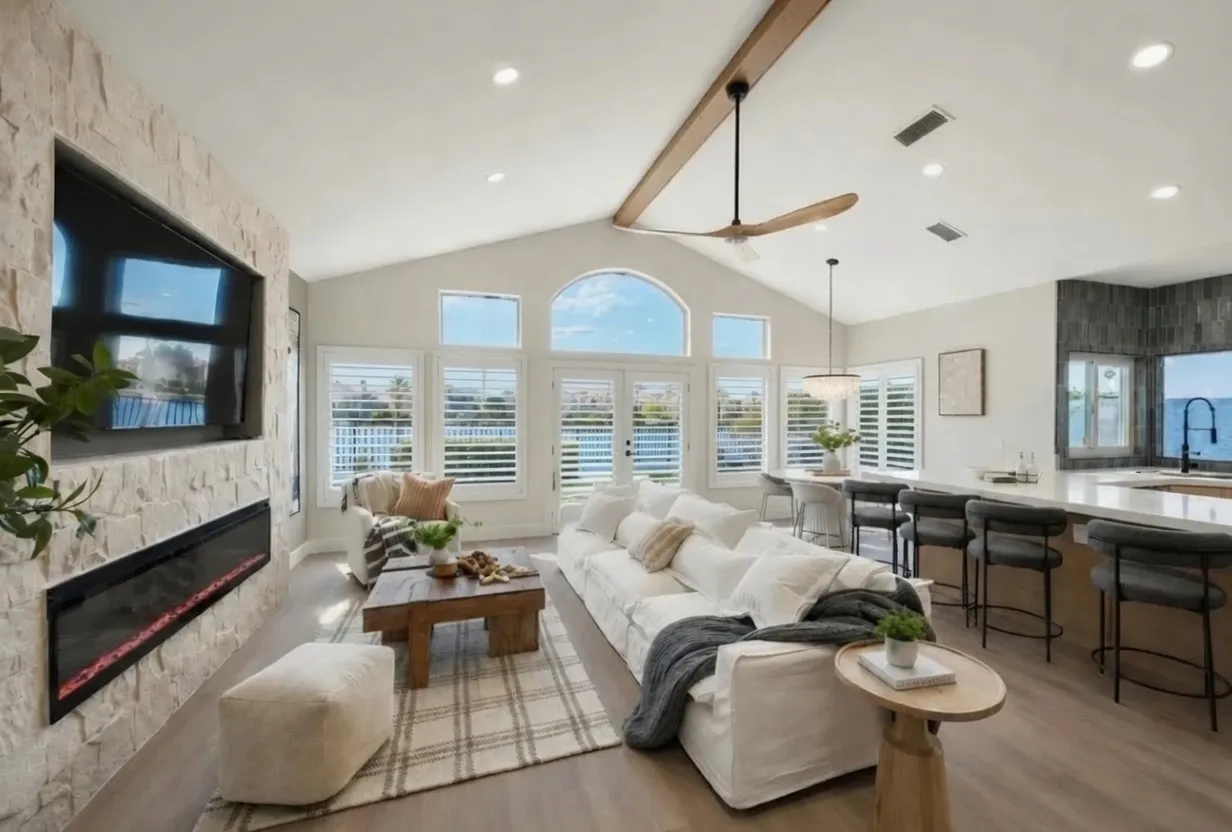
Cutout frames clear the handle.
The detail that makes or breaks a French door shutter is the handle. Most French doors use a lever or knob that sits close to the glass, and a standard shutter frame would collide with it.
The answer is a cutout frame: the shutter frame is notched around the handle or lever, so the hardware operates freely and the panel still covers the full glass.
We measure the handle's exact position, backset, and throw at the consultation. The cutout is built into the frame at the factory - not trimmed on site - so the finished edge looks intentional.
- Lever handles and knobs
- Deadbolts and multi-point locks
- Handle backset and clearance
- Astragals and center posts on door pairs
If a handle sits too tight to the glass for a clean cutout, we will tell you at the measure - and show you what hardware change would solve it.
How the shutter mounts to an operating door.
A door is not a wall. It moves, it closes against weatherstripping, and it carries its own hardware - so the shutter has to be engineered for a moving mount.
The frame attaches to the door slab around the glass, and the panel is sized so the added depth does not interfere with the door closing or latching. Clearance is checked in three places: the handle, the door stop, and the wall or furniture the door opens toward.
Weight matters too. A door hinge carries the shutter's weight all day, which is part of why we size and spec these panels differently than a window shutter of the same dimensions.
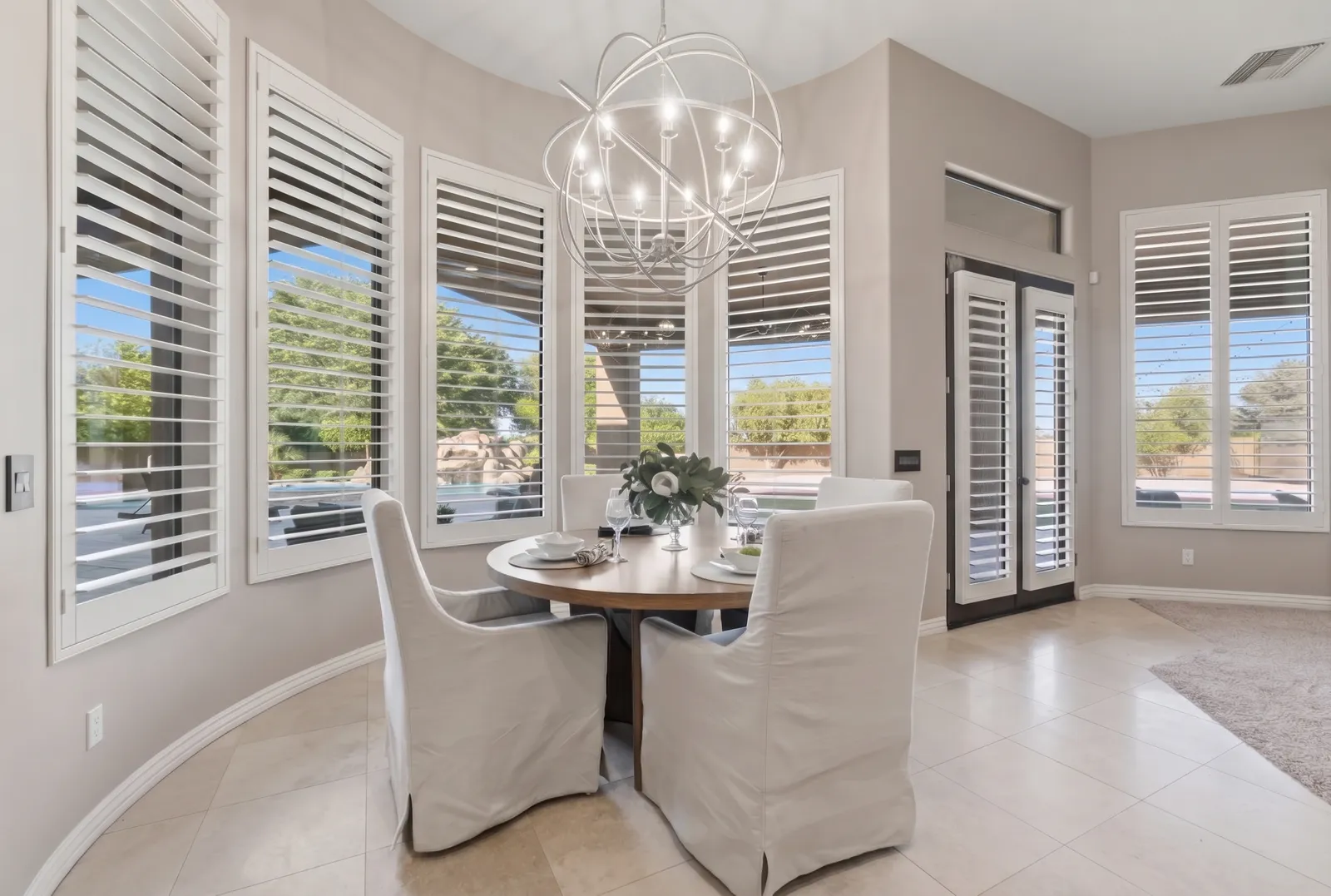
Hinged panels: reaching the glass behind the shutter.
French door shutters are usually built with the panel hinged to its frame, so you can swing the shutter open to clean the glass without removing anything.
Day to day you never need to do this - light and privacy are handled by the louvers. But door glass gets touched, and being able to open the panel makes cleaning simple.
When the door itself opens, the shutter stays latched to its frame and travels with the door as one unit. There is no rattle if the panel is built and fitted correctly - which is a build-quality question, and part of why door shutters are a poor fit for off-the-shelf sizing.
Why French doors are a best-case shutter application in Arizona.
French doors are usually the brightest opening in the room - often west- or south-facing onto a patio - which in Arizona means glare, heat, and fade pouring through glass at exactly seated height.
A shutter turns that glass into something you can meter: louvers tilted against the afternoon sun while the room stays bright, closed for privacy at night, wide open when the evening cools down.
Fabric treatments fight a door - they swing, catch, and wear at the hardware. A rigid shutter panel built to the door is the treatment that actually survives daily use in a dusty, high-sun climate.
Material: polymer first, here more than anywhere.
Our default recommendation across the house is polymer, and doors strengthen the case: door glass takes direct sun, and a door slams, swings, and lives harder than any window.
Sanctuary polymer panels do not warp, crack, or fade in that exposure, and the finish wipes clean after dust season.
Wood earns its place on French doors only where a stained finish is the design goal - and we will place it honestly, with the same advice we give at every window.
Sliding doors and other openings.
If your project includes a sliding glass door, that is its own conversation - bypass and bi-fold configurations instead of door-mounted panels.
We design French door, sliding door, and window shutters together so the whole room reads as one system.
From our Google reviews.
“Louis did an exceptional job on the installation of the French door shutter. He's kind, considerate, and very professional. Southwest Blinds found a good representative in Louis!”
French door shutter questions, answered.
Can you put plantation shutters on French doors?
Yes. French door shutters mount directly to the door slab with a frame cut out around the handle, and the panel swings with the door when it opens. They are one of the most popular door shutter applications we build in Arizona.
What about the door handle - won't the shutter hit it?
The frame is built with a factory cutout around the handle or lever, measured to your exact hardware, so the handle operates freely and the panel still covers the glass.
Does the shutter interfere with opening the door?
No - the shutter is part of the door and travels with it. We verify clearance at the handle, the door stop, and the swing path during the in-home measure so the door closes and latches exactly as it did before.
Can I still clean the glass?
Yes. The panel is hinged to its frame, so it swings open for glass cleaning without removing anything.
What material is best for French door shutters?
Polymer, in almost every case - door glass takes direct sun and daily use, which is exactly the exposure polymer is built for. Wood belongs on a French door only when a stained finish is the design goal.
Do French door shutters work on double doors?
Yes - each door gets its own fitted panel, and the frames are designed around the astragal or center post so the pair reads as one clean unit.
Built to your door, not to a template.
Every French door shutter we install is measured around the actual door, handle, and swing in your home.
A free in-home consultation covers the design, the cutout, the material, and the exact price - with samples you can hold up to the door.
Door shutters near you: Phoenix