
One of the most common questions homeowners ask when shopping for plantation shutters is:
Should I choose wood shutters or faux wood shutters?
It sounds like a simple question, but it can get confusing quickly.
If you search online, you will find people warning you not to buy faux wood shutters because they can warp, sag, melt, yellow, or feel too heavy.
Then you will find other people warning you not to buy wood shutters because they can warp, chip, peel, crack, bubble, or fail in dry climates.
So which one is true?
The honest answer is that both sides can be right, but not in every case.
The real issue is not simply whether the shutter is wood or faux wood. The real issue is the quality of the shutter, the way it is built, the finish process, and whether the product is designed for your climate.
The Material Matters, But Quality Matters More
There are low-quality faux wood shutters that can sag, yellow, warp, or fail over time.
There are also low-quality wood shutters that can warp, crack, chip, peel, or have paint problems.
But that does not mean all faux wood shutters are bad. It also does not mean all wood shutters are bad.
A high-quality poly shutter can be extremely durable, energy efficient, and long lasting. A high-quality wood shutter can be beautiful, lightweight, strong, and resistant to many of the problems people worry about.
That is why it is important to compare the actual product, not just the category.
At Arizona Plantation Shutters, we offer both high-quality poly shutters and high-quality wood shutters. We are comfortable selling either one because we have spent decades learning which products hold up and which ones do not.
The right choice depends on your home, your budget, your style, and what matters most to you.
What Are Faux Wood Plantation Shutters?
When people say “faux wood shutters,” they are usually talking about a man-made shutter material that is designed to look like a painted wood shutter.
But not all faux wood shutters are the same.
Some are hollow vinyl. Some are composites. Some are a blend of wood particles and synthetic materials. Some are lower-cost products that may not hold up well in large windows or hot climates.
The product we usually recommend in this category is a solid poly shutter.
A solid poly shutter is not hollow. It is not just a thin plastic shell. It is a dense material all the way through. That gives the shutter strength, durability, and insulating value.
Poly shutters are usually available in white, off-white, or gray tones. They are a great option for homeowners who want a painted shutter look without moving into a more expensive wood shutter.
The Concern With Poly Shutters: Weight and Sagging
One of the most common concerns with faux wood or poly shutters is weight.
Poly is dense. That density is part of what makes it durable and energy efficient, but it also means the material can be heavier than wood.
So the question becomes:
How do you keep a heavy shutter from sagging, bending, or flexing over time?
The answer is reinforcement.
A high-quality poly shutter should have internal reinforcement in the louvers and the stiles. The stile is the vertical side piece of the shutter panel. Reinforcement helps prevent bending, twisting, and sagging.
This is one of the biggest differences between a cheap faux wood shutter and a better poly shutter.
A poorly built faux wood product may flex or struggle under its own weight, especially on larger windows. A better poly shutter is engineered to stay strong and stable.
Why Solid Poly Shutters Can Be a Great Choice
A quality poly shutter can be a very practical choice for Arizona homes.
Poly shutters are durable, easy to clean, and moisture resistant. They are a good fit for homeowners who want a clean painted shutter look and a strong product that can handle daily use.
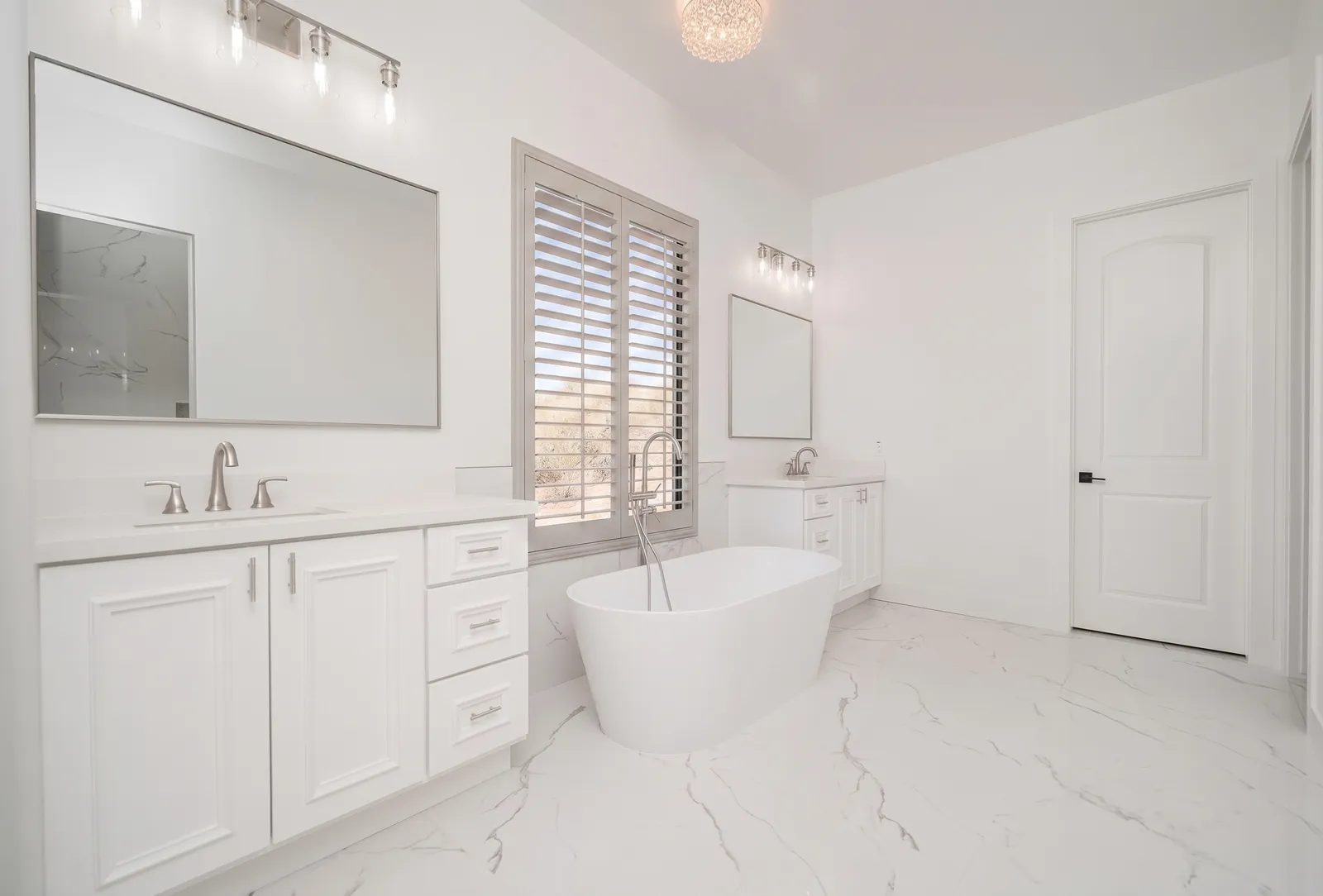
Poly shutters are especially popular for:
- Bathrooms
- Laundry rooms
- Kitchens
- Kids’ rooms
- High-use areas
- Homes where durability is a priority
- Homeowners who want a white or gray painted shutter look
They can also provide excellent insulation because the material is dense and solid.
The key is making sure you are choosing a quality poly shutter with the right internal reinforcement, not just a low-cost faux wood product.
What Are Wood Plantation Shutters?
Wood plantation shutters are made from real wood, often basswood or another lightweight hardwood.
For a long time, wood shutters were considered the premium shutter option. Many homeowners still think of wood as the “best” shutter material because it is natural, lightweight, strong, and beautiful.
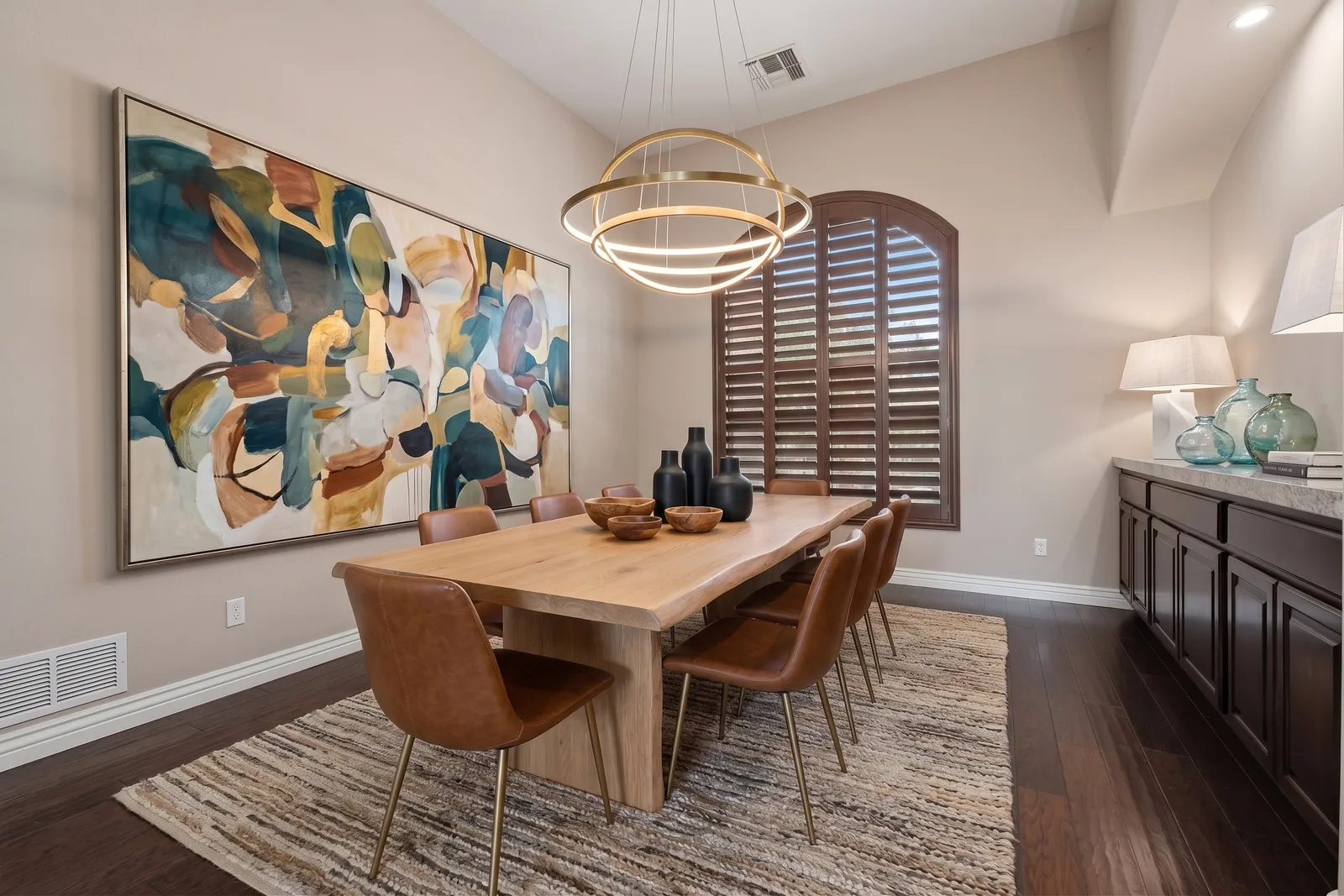
Wood shutters can be painted or stained. That is one major advantage over most poly shutters.
If you want a stained shutter, a rich wood tone, or a custom furniture-like finish, wood is usually the direction you need to go.
Wood shutters are also lighter than poly shutters, which can be helpful on larger panels or certain specialty applications.
The Concern With Wood Shutters: Warping and Finish Problems
The biggest concerns with wood shutters are warping and paint failure.
Wood is a natural material. It used to be living material, which means it naturally expands and contracts as temperature and humidity change.
If the wood is not dried properly, or if the paint finish is not applied correctly, problems can show up later.
That may include:
- Warping
- Cracking
- Chipping
- Peeling
- Paint bubbling
- Finish separation
This is why the manufacturer and finishing process matter so much.
A cheap or poorly made wood shutter may not perform well, especially in a harsh climate. But a high-quality wood shutter that is dried, treated, primed, sanded, painted, and baked correctly can perform beautifully.
Why Climate-Specific Wood Shutters Matter
Arizona is dry. Las Vegas is dry. Other parts of the country may be humid.
A wood shutter that works well in one climate may not be built the same way for another climate.
This is where better manufacturers make a difference.
Some high-quality wood shutter manufacturers use a drying process that is adjusted based on the region where the shutter will be installed. That means the wood is prepared differently for dry climates like Arizona and Nevada than it would be for humid climates.
That matters because the wood needs to be stable in the environment where it will live.
For Arizona homeowners, this is a major reason to choose a manufacturer that understands dry climates and builds shutters accordingly.
Why the Paint Finish Matters on Wood Shutters
The paint finish is one of the biggest differences between a quality wood shutter and a cheaper wood shutter.
Wood expands and contracts. If the paint finish does not move with the wood, the finish can separate. That separation can lead to cracking, bubbling, chipping, or peeling.
A better wood shutter goes through a much more involved finishing process.
That may include multiple coats of primer, sanding between coats, baking the primer into the material, applying paint finishes, sanding again, and baking the finish so it bonds properly to the shutter.
That process is more expensive and more time-consuming, but it helps the finish stay attached to the wood as the shutter naturally expands and contracts.
This is why some wood shutters hold up beautifully while others fail. The finish process matters.
Is Wood More Expensive Than Poly?
In many cases, yes.
A high-quality wood shutter usually costs more than a poly shutter because of the material, the drying process, the finishing process, and the labor involved.
That does not automatically mean wood is the better choice for every homeowner. It just means wood is usually the more premium option.
Poly may be the better value if you want a clean white shutter, strong durability, and a lower price point.
Wood may be worth the upgrade if you want a stained finish, a lighter material, a more premium construction, or a specific look that poly cannot provide.
When to Choose Poly Plantation Shutters
Poly shutters are a great choice when you want durability, easy maintenance, and a clean painted look.
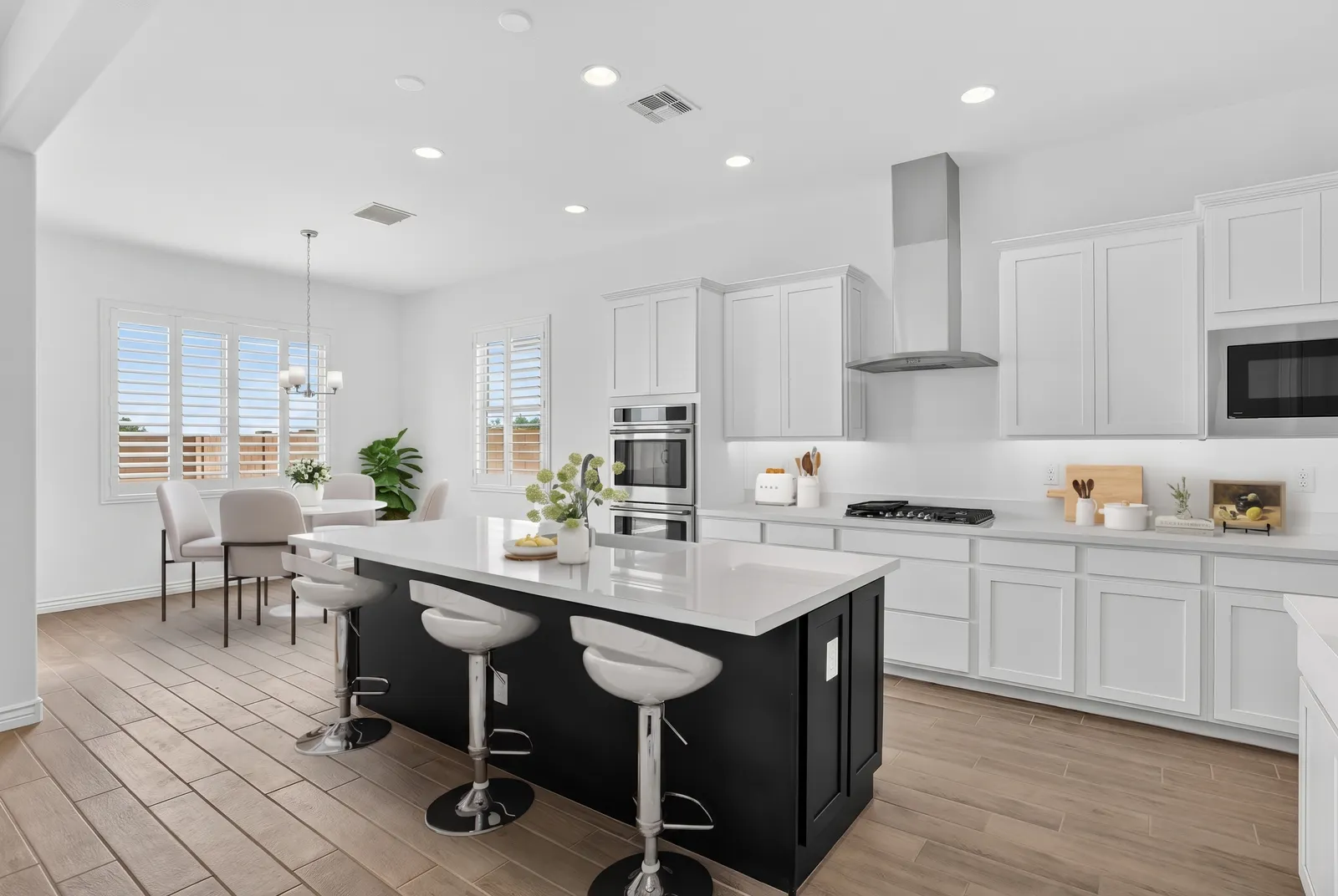
Choose poly shutters if:
- You want white, off-white, or gray shutters
- You want a durable shutter for daily use
- You want a more budget-friendly option than wood
- You want a moisture-resistant product
- You are covering bathrooms, kitchens, or high-use areas
- You want good insulation
- You want a strong product with internal reinforcement
For many Arizona homeowners, poly shutters are the most practical choice.
They look great, they hold up well, and they give you the classic plantation shutter appearance without the higher cost of wood.
When to Choose Wood Plantation Shutters
Wood shutters are a great choice when you want a premium look, lighter material, or a stained finish.
Choose wood shutters if:
- You want stained shutters
- You want a real wood product
- You want a lighter shutter panel
- You have a more traditional or custom home
- You want a premium finish
- You are comfortable with a higher price point
- You want more color or finish flexibility
Wood shutters can be beautiful. The key is choosing a high-quality manufacturer with a strong drying and finishing process.
Which Is Better: Wood or Faux Wood Shutters?
Neither option is automatically better.
A cheap faux wood shutter can fail. A cheap wood shutter can fail too.
A quality poly shutter can be an excellent long-term product. A quality wood shutter can also be an excellent long-term product.
The better question is:
Which shutter is better for your home, your budget, and your goals?
If you want a durable white shutter that is practical and cost-effective, poly may be the better choice.
If you want a stained shutter, premium wood construction, or a more custom finish, wood may be the better choice.
The right answer depends on what you care about most.
Final Thoughts
The wood vs. faux wood shutter debate can be confusing because there is a lot of bad information online.
Some people compare cheap faux wood shutters to high-quality wood shutters. Others compare cheap wood shutters to high-quality poly shutters. That makes the conversation unfair from the start.
The truth is that quality matters more than the label.
A well-built poly shutter with solid material and internal reinforcement can be a great choice. A well-built wood shutter with proper drying, priming, sanding, painting, and baking can also be a great choice.
At Arizona Plantation Shutters, we offer both because both can be excellent when they are made correctly. If you want the full engineering breakdown of how each material handles the desert, read our guide to wood vs. composite shutters in Arizona.
Our job is to help you understand the differences and choose the shutter that fits your home, your style, and your budget.