
Polymer vs. Wood Plantation Shutters: What Actually Holds Up in Arizona
If you're choosing between wood and polymer shutters, you've probably heard the national version of this comparison - wood is "premium," polymer is "budget." In Arizona, that framing falls apart. When the glass behind a shutter panel spends every July afternoon in triple-digit heat, material choice stops being a style question and becomes a durability question. Here's the honest breakdown, based on what we see hold up - and fail - in Arizona homes.
The quick verdict
Our recommendation after two decades of installing both across Arizona: polymer, on every window - unless your design requires a stained or custom-color finish. That's the one thing polymer can't do. Everywhere else, polymer simply lasts, with virtually no visible aging in the window. Wood in Arizona ages - it warps, peels, and fades - and that aging isn't just cosmetic. Warped panels stop operating smoothly and warped louvers stop closing tight, which means light leaking into rooms you want dark. In a painted white finish, polymer and wood are indistinguishable from across the room, so unless stain or a custom color is the goal, there's no tradeoff to make.
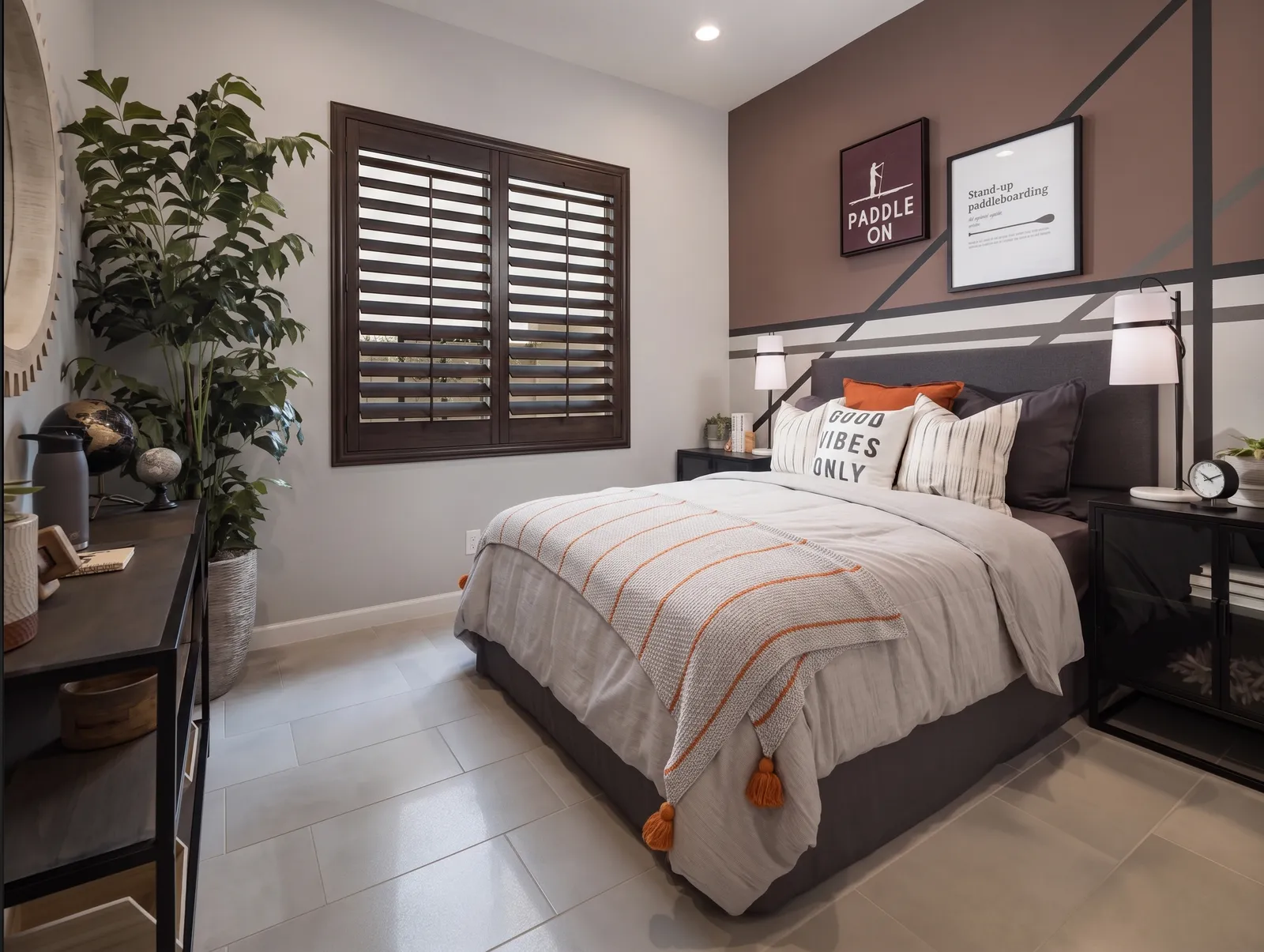
Side-by-side comparison
| Factor | Polymer Shutters | Wood Shutters |
|---|---|---|
| Heat & UV resistance | Excellent - engineered for extreme sun; won't yellow with quality UV-stabilized finishes | Warps, peels, and fades under Arizona heat and UV cycles |
| Warp resistance | Will not warp, crack, or split | Real risk - and warping affects operation and light blocking, not just looks |
| Lifespan in Arizona | 20+ years typical, with virtually no visible aging | Varies; warping, peeling, and fading are common, especially on sun exposures |
| Moisture rooms (bath, kitchen, laundry) | Waterproof - ideal | Not recommended; moisture accelerates finish failure |
| Finish options | Painted finishes in whites and neutrals | Paint or stain, custom color matching, widest design range |
| Wide windows / panel span | Heavier material; wide spans handled with panel engineering | Lighter material, but warp risk grows with panel width |
| Specialty shapes (arches, angles) | Limited | Excellent - easier to craft custom shapes |
| Insulation | Strong - hollow-cell construction adds insulating value against cooling costs | Good - solid wood insulates, but less than hollow-cell polymer |
| Cleaning & dust (monsoon season) | Wipes clean; water-safe | Wipes clean; keep water/harsh cleaners off the finish |
| Upfront cost | Comparable to painted wood, often slightly less | Premium, especially stained or custom-color |
| Warranty | Everything's Covered Guarantee - sun & UV damage covered, $0 service and labor, for as long as you live in your home | Normandy carries its own manufacturer coverage, explained at your consultation |
| Best use case | Every window - our default recommendation | Only when a stained or custom-color finish is required |
Do Wood Shutters Warp in Arizona Heat?
Yes — and warping is only part of how wood ages here. The space between your window glass and a closed shutter panel acts like a heat trap. On a west-facing window in July, that pocket climbs far above the outdoor air temperature. Wood is an organic material that expands, contracts, and loses moisture under those cycles. Over years of Arizona summers, that shows up as bowed louvers, joints pulling apart at the corners, finishes peeling and hairline-cracking, and color fading under relentless UV.
Here’s what the national comparisons miss: wood’s aging isn’t just cosmetic. A warped panel drags and binds instead of swinging smoothly. Warped louvers no longer seat tight against each other when closed — and once that happens, light leaks into bedrooms and media rooms you specifically bought shutters to keep dark. We’ve serviced enough aging wood shutters across the Valley to know this is how the story ends on Arizona windows; it’s a matter of when, not if, with sun exposure setting the pace.
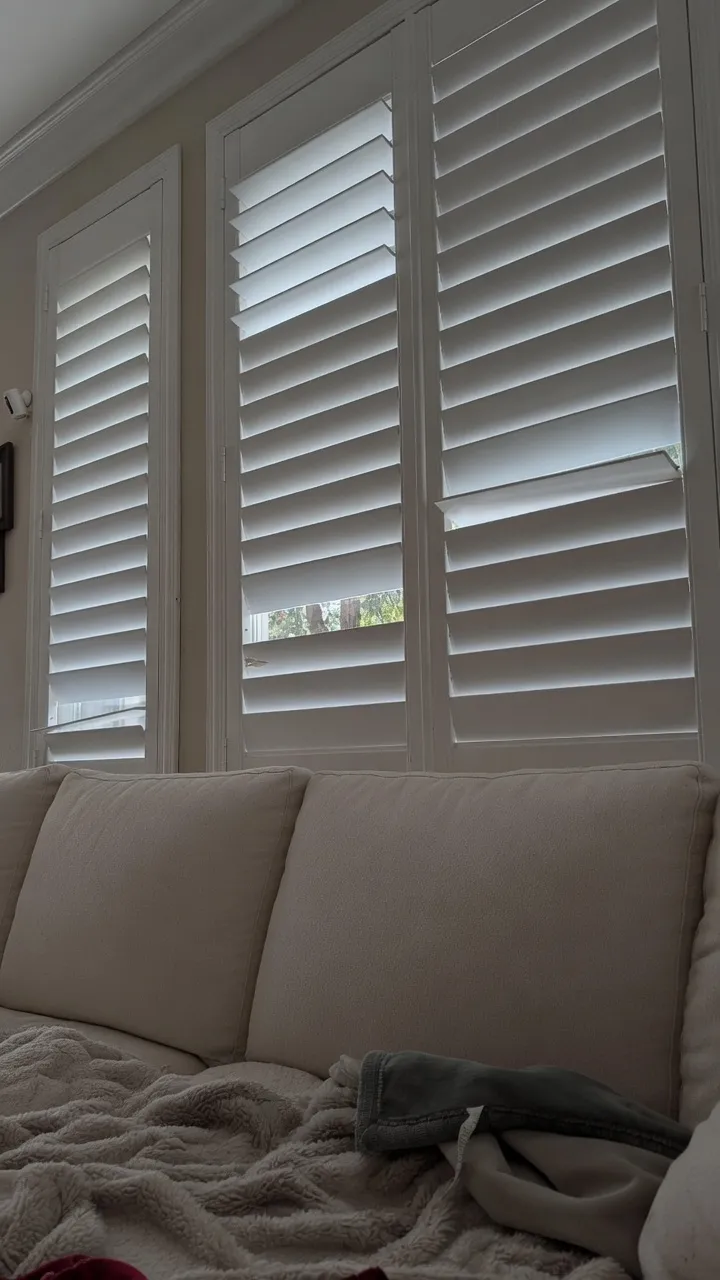
How Polymer Handles the Same Conditions
Polymer shutters are a solid synthetic material engineered specifically for the conditions that punish wood: they don’t absorb moisture, don’t expand and contract meaningfully with temperature swings, and quality UV-stabilized finishes resist the yellowing that cheap vinyl products are known for. That last distinction matters — the polymer shutters a custom shop installs are not the hollow builder-grade vinyl you may have seen sag in a rental. (If you’re comparing against big-box vinyl, that’s a different conversation — see our custom vs. big-box comparison.)
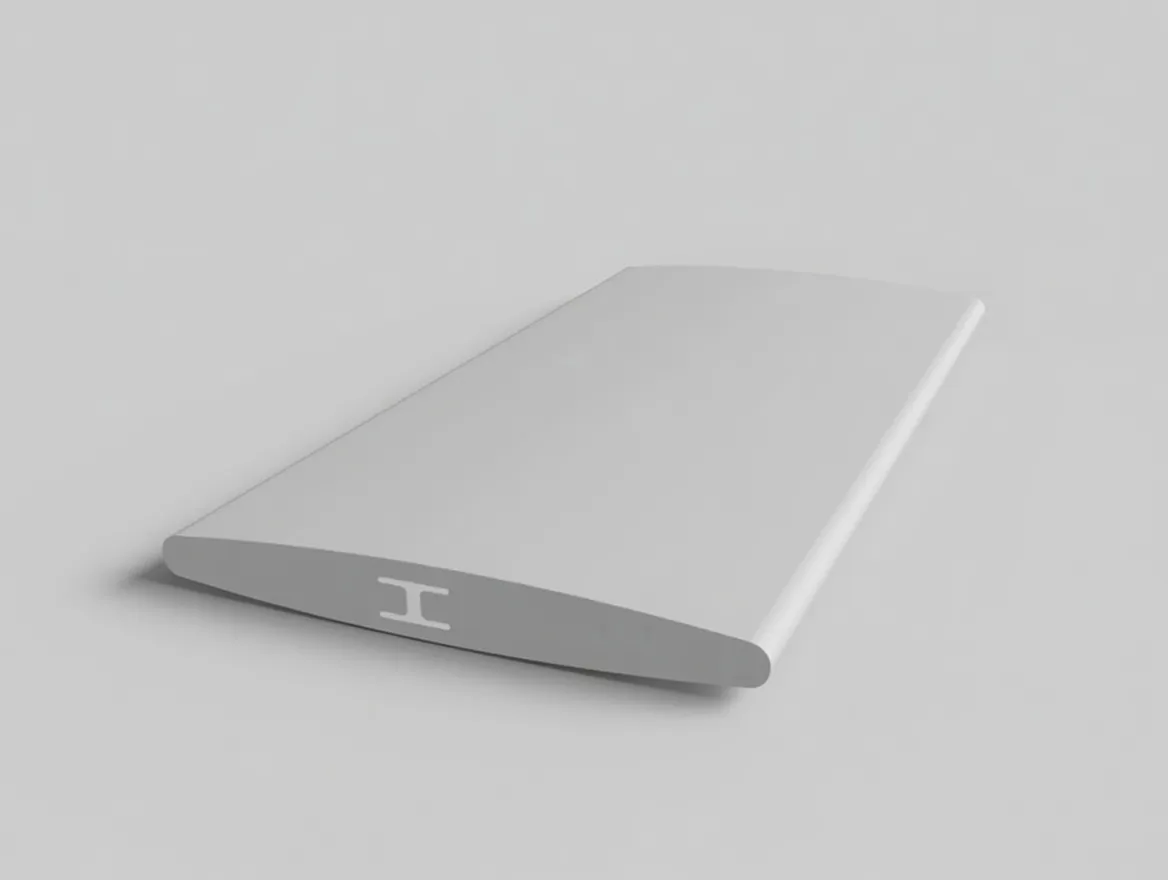
The hollow-cell construction of quality polymer also carries a side benefit Arizona homeowners feel in August: trapped air inside the panel structure adds insulating value at the window, which is exactly where summer heat gain concentrates.
When should you choose wood instead?
There is exactly one thing wood does that polymer can’t: stained and custom-color finishes.
Polymer comes in factory painted finishes — whites and neutrals — and cannot be stained. If your design calls for a stained shutter matched to cabinetry, flooring, or a wood-tone palette, or a custom color outside the polymer range, wood is the only material that gets you there. A well-made stained basswood shutter is a genuinely beautiful thing, and for some rooms it’s the right design call.
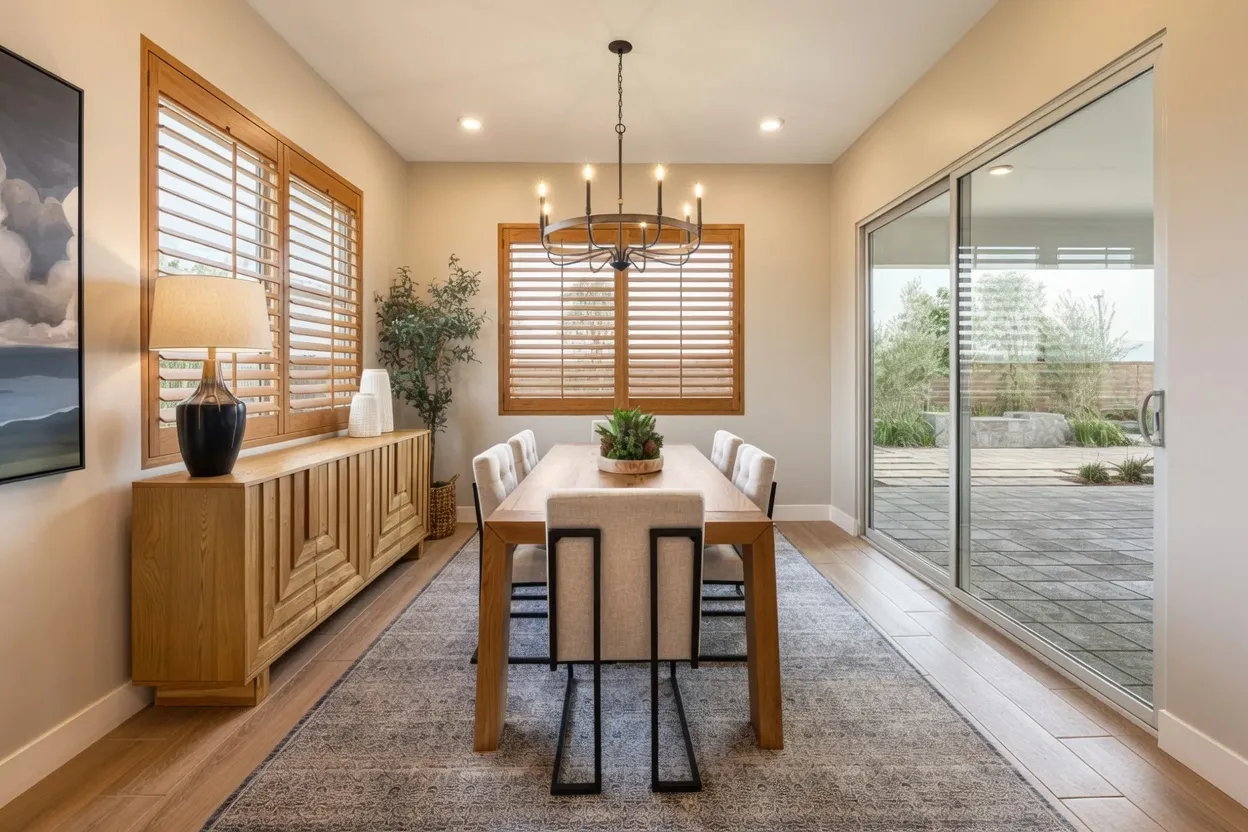
If you go that direction, go in with clear eyes: you’re trading longevity for the finish. We’ll help you place wood where it takes the least punishment — shaded and interior-facing exposures — so the finish you chose it for lasts as long as possible.
Which is right for your home?
The west-facing great room
Polymer, no hesitation. This is the highest heat-load scenario in an Arizona home, and it's exactly where we see wood shutters age fastest. Polymer here protects both the investment and your cooling bill.
Kitchens, bathrooms, and laundry rooms
Polymer. Steam, splashes, and humidity are hard on wood finishes. Polymer is waterproof and wipes clean.
A large picture window overlooking the yard
Polymer. Wide spans are engineered with the right panel configuration, and you keep the no-aging guarantee on one of the most visible windows in the house.
The formal dining room with stained trim
This is the one scenario where wood earns its place - stained to match your millwork, in a conditioned, shaded room where it takes the least stress. The exception that proves the rule.
Whole-home projects
Polymer throughout, wood only where a stained or custom-color finish is required by the design. In a painted white finish, guests will never spot a difference between rooms - but twenty years from now, you will.
What Arizona homeowners say
“My Experience with Southwest Blinds and Shutters have been exceptional from start to finish. Rob Rocha our designer came out to our house gave us good advice and a detailed explanation of the different styles and materials, we ended up going with the Broadleaf Poly Shutters. Corey Hungerford our installer was friendly and professional, he did the installation fast and efficiently. Thank you for a great service.”
“Zach and Josh completed install of 18 Shutters today in our home. Truly a pleasurable experience. Neat, clean and respectful. Highly recommend Southwest Blinds & Shutters. One stop shopping. Perfect fit...measure twice cut once. Not the cheapest bid but definitely the best.”
Frequently asked questions
Do wood shutters warp in Arizona?
Yes - heat builds between the glass and the panel, and over repeated summer cycles wood warps, peels, and fades. Sun-facing windows age fastest, and the warping affects more than looks: panels bind, louvers stop closing tight, and light leaks through. It's the main reason we recommend polymer as the default.
Are polymer shutters cheaper than wood?
Usually comparable to painted wood and often somewhat less; stained and custom-color wood carries the biggest premium. The larger cost difference shows up over time - polymer's durability and warranty coverage in Arizona conditions typically make it the lower total-cost option.
Can polymer shutters be painted or stained?
They come in factory painted finishes - typically whites and neutrals - and cannot be stained. If a stained finish is essential to your design, wood is the right material.
Can you tell the difference between polymer and wood shutters?
In a painted finish, not from any normal viewing distance. Up close, wood shows fine grain under paint and feels lighter when you operate the panel. Stained finishes are the giveaway - only wood can do them.
How long do shutters last in Phoenix heat?
Quality polymer shutters routinely exceed 20 years with virtually no visible aging. Wood ages on a different curve - warping, peeling, and fading appear over time on most exposures, and hard western exposures can show it in well under 10 years.
Which is better for resale value?
Both are permanent fixtures that convey with the home and appeal to buyers. What hurts resale is visibly aged treatments - which is an argument for putting the right material on each exposure rather than one material everywhere.
Get the right material on every window
Our recommendation is simple, and we'll give it to you as plainly in your living room as we do here: polymer on every window, unless your design requires a stained or custom-color finish. A free in-home consultation is where we confirm measurements, panel configurations, and finishes - and if wood is right for a specific room, we'll help you place it where it will last.
Serving the Phoenix Valley from our Gilbert, Peoria, and Scottsdale showrooms.