
Plantation Shutters vs. Solar Screens: The Honest Arizona Comparison
If your home came with sunscreens, your builder made a heat decision for you - and it wasn't a bad one. Exterior solar screens do something no interior treatment can. But if you've lived behind them for a few summers, you already know what they cost you, and you're probably reading this page because of it. Here's the full picture, including the setup where both products belong on the same window.
The quick verdict
Solar screens win exactly one contest, and they win it honestly: raw heat interception. By stopping solar energy before it passes through the glass, an exterior screen rejects heat in a way nothing mounted inside the window can match. Shutters win everything else a window is for: light you can control, privacy you can adjust, insulation that works at night and in winter, rooms that aren't permanently dimmed, views that aren't permanently screened, and an interior that looks designed rather than defended. That's why this isn't really an either/or - the strongest west-facing walls in Arizona often run both: screens outside intercepting, shutters inside insulating and controlling. For every other exposure, shutters alone usually do the whole job, and the screens can come off.
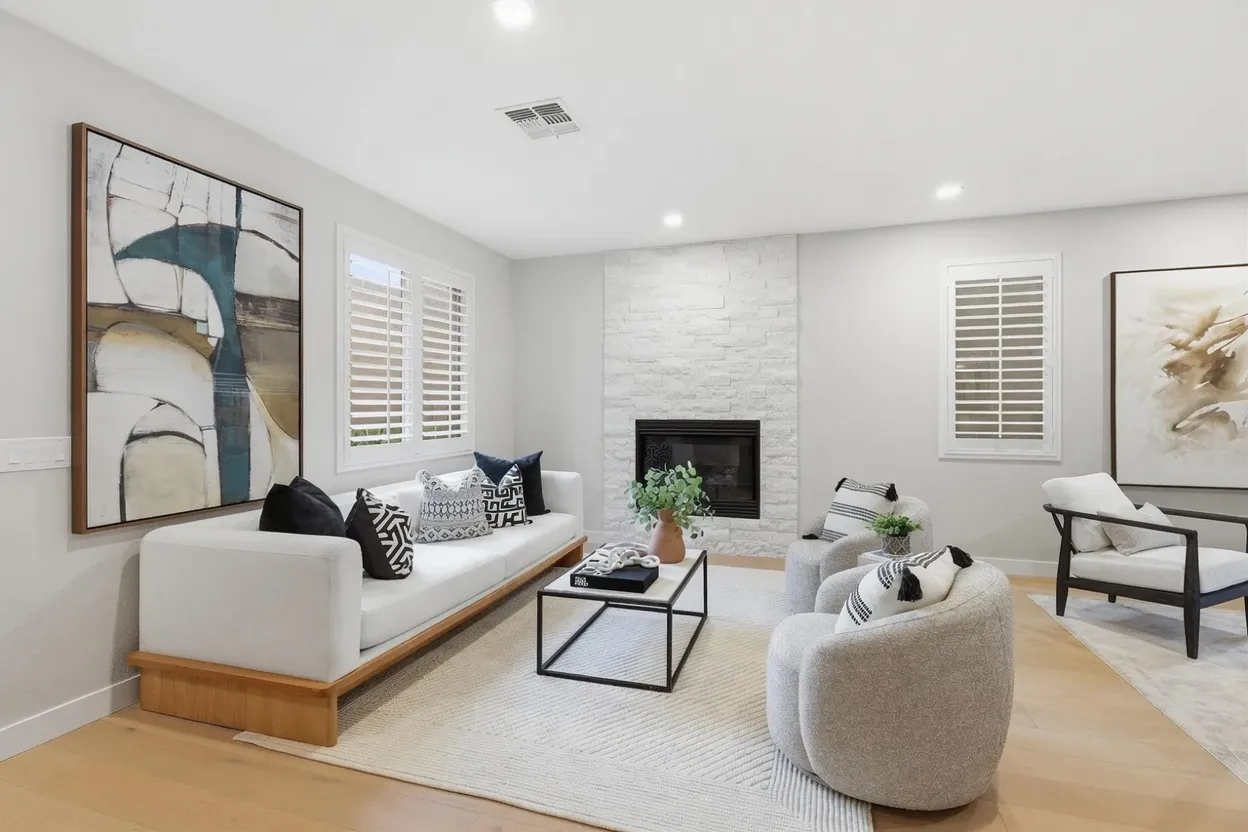
Side-by-side comparison
| Factor | Plantation Shutters | Solar Screens |
|---|---|---|
| Where it works | Inside - insulates and controls after the glass | Outside - intercepts heat before the glass |
| Raw heat rejection | Strong (rigid panel + dead air) | Strongest - exterior interception |
| Light control | Louver-precise, hour by hour | None - fixed dimming, all day, every day |
| Privacy | Adjustable, day and night | Daytime one-way only; none at night with lights on |
| View | Open louvers = open view | Permanently screened |
| Night & winter performance | Insulates around the clock, all seasons | No function after sundown; blocks warming winter sun |
| Interior appearance | A design feature | Invisible from inside - but rooms sit dimmer |
| Curb appeal | Clean from the street | Darkened windows; HOA rules vary |
| Durability | 20+ years, worry-free | Mesh degrades under UV and monsoon dust; frames dent |
| Maintenance | Dusting | Periodic cleaning; removal for window washing |
| Resale | Permanent upgrade that conveys | Neutral to negative, depending on buyer and condition |
| Best role | The window treatment | A single-purpose heat tool |
What do solar screens actually do well?
Let’s start with what the sunscreen crowd gets right, because it’s real physics: heat that never enters the glass never has to be fought inside the room. An exterior screen absorbs and reflects solar energy at the surface of the house, which is why builders across the Valley install them by default — they’re an inexpensive, effective blunt instrument against the sun.
If heat were the only thing a window did, this comparison would be over. But a window is also your light, your view, your privacy, and a wall of your room’s design — and that’s where the blunt instrument shows its edges.
What You Give Up Living Behind Screens
The light, permanently
A solar screen dims every hour of every day — there’s no opening it on a beautiful December morning. Homeowners consistently describe screened rooms the same way: cave-like. The dimming you wanted in July is still there in January.
The view, permanently
The mesh that intercepts sun also sits across your mountains, your landscaping, your sunset. It’s a haze you stop noticing until the day the screens come off.
Nothing at night, nothing in winter
After sundown a screen does no work at all — no privacy (interior lights reverse the one-way effect), no insulation. And in winter it keeps blocking the free solar warmth you actually want.
The wear cycle
Arizona UV and monsoon dust age mesh — fading, brittleness, sagging — and worn screens read clearly from the street. They also come off for window cleaning, which is exactly as fun as it sounds.
None of that makes screens wrong. It makes them what they are: a heat tool, not a window treatment.
What Shutters Do That Screens Can’t
A polymer shutter treats the window as something you use, not just something you defend. Louvers dial the light hour by hour — glare knocked down at 4 PM, wide open at 9 AM, closed for the bedroom at noon. Privacy is adjustable and works at night. The rigid panel and dead-air pocket insulate around the clock, in both seasons — holding heat out in July and warmth in on winter nights, when a screen is doing nothing. And it’s all worry-free: no mesh to wear, nothing to remove, nothing to maintain beyond dusting, for as long as you own the home.
Should you run solar screens and shutters together?
For the hardest exposure — the true west wall — the right spec is often not a choice at all:
Screens outside intercept the raw solar load before the glass. Shutters inside insulate what gets through, control the light and privacy, and carry the room’s design. Stacked, they’re the maximum defense Arizona offers a window — and they cover each other’s weaknesses: the shutter gives you back the night, the winter, and the control the screen can’t provide; the screen takes heat off the glass before the shutter ever sees it.
For north and east exposures, that stack is usually overkill — shutters alone do the whole job, and removing the screens gives you back the light and the view your builder took.
Which is right for your home?
West-facing great room that bakes
Both - screens intercepting, shutters controlling. The full west-facing windows comparison covers the layered playbook.
North- and east-facing rooms with builder screens
Shutters, and seriously consider taking those screens off - you're paying the light-and-view tax for heat protection those exposures barely need.
"My HOA has opinions."
Shutters sidestep the whole conversation - everything happens inside the glass.
Heat-only budget fix, no interior treatment planned
Screens do that one job cheaply. Just know what you're living without.
What Arizona homeowners say
“We had a great experience with Southwest Blinds and Shutters from start to finish. Rob (sales) was very knowledgeable about the shutters and installation process. ... We absolutely love the beauty of the new shutters. My only regret was that we waited so long to make this gorgeous improvement to our home!”
“Every step went without a hitch, from a visit with their designer Echo that reviewed our options on available materials to the color that would fit best in our home, her suggestions were spot on. ... The house got a huge face-lift. If you're looking for new blinds and plantation shutters, I highly recommend this firm.”
Frequently asked questions
Do solar screens really work in Arizona?
Yes - on raw heat interception they're genuinely effective, which is why builders install them by default. What they don't do is anything else a window treatment does: light control, privacy, night or winter function, or preserving the view.
Do solar screens make rooms dark?
Yes, and permanently - the dimming is constant, every hour of every season. It's the most common complaint we hear from homeowners living behind them.
Can you have solar screens and shutters together?
Yes - screens outside plus shutters inside is the strongest west-wall combination in Arizona. The screen intercepts heat before the glass; the shutter insulates, controls light and privacy, and works at night and in winter.
Do HOAs allow solar screens?
Rules vary by community - many regulate screen color and condition since they're visible from the street. Shutters avoid the question entirely; they're inside the glass.
Do solar screens work at night?
No. The one-way privacy effect reverses when interior lights come on, and there's no insulation function after sundown. Screens are a daytime, summer product.
Should I remove my builder sunscreens?
On west and south exposures, keep them if heat is a battle - ideally paired with shutters. On north and east exposures with shutters installed, removal usually wins: you regain light and view while giving up heat protection those walls barely needed.
Get the inside-and-outside answer
The right call is exposure math - which windows need interception, which need control, and which need both. A free in-home consultation walks every window and gives you the straight answer, screen decisions included.
Serving the Phoenix Valley from our Gilbert, Peoria, and Scottsdale showrooms.