
Painted vs. Stained Wood Shutters: How to Choose (and When to Skip Wood)
If you've decided on wood shutters, one decision remains: painted or stained. But before the finish question, it's worth asking the question that usually settles it - because in Arizona, the answer to "painted or stained" often turns out to be "polymer."
The quick verdict
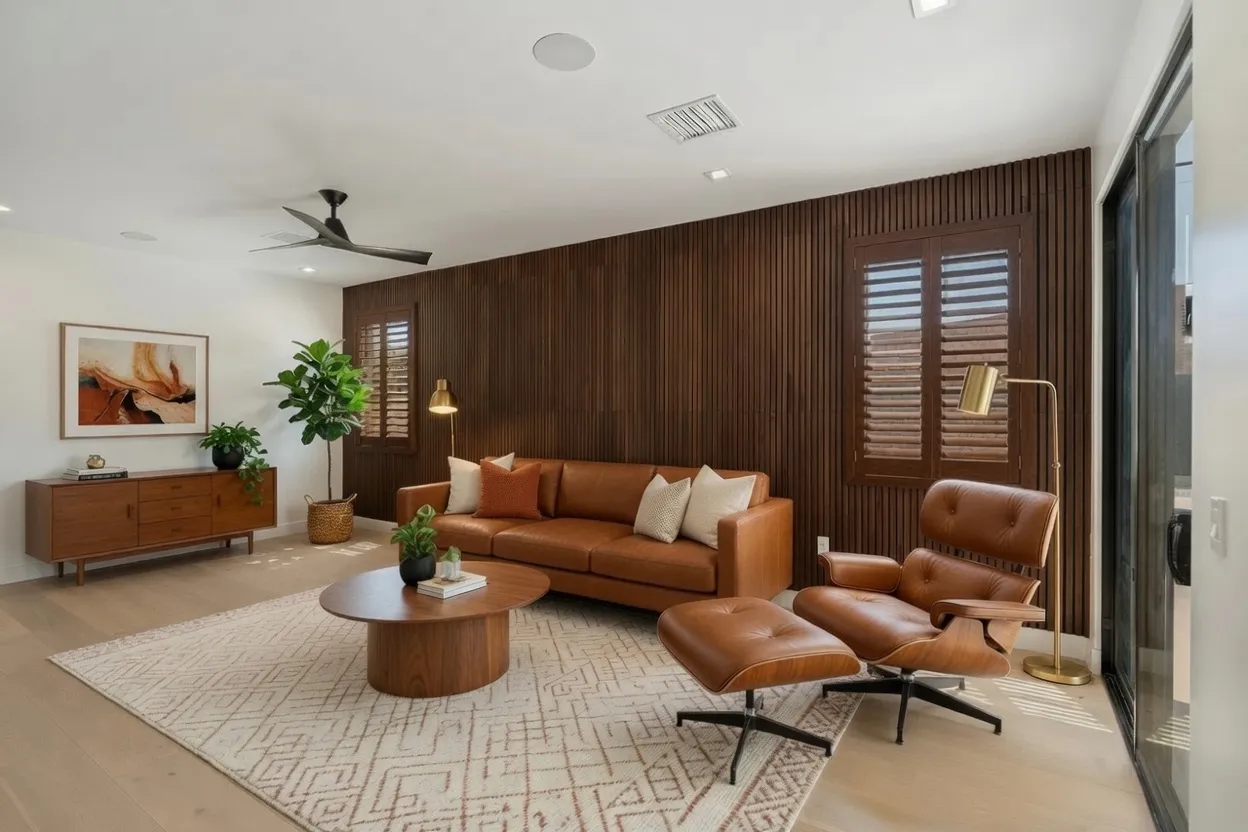
If you want a painted finish, you usually don't need wood at all - polymer delivers the same painted look, indistinguishable from across the room, without wood's Arizona aging. That leaves painted wood one genuine niche: custom colors outside the polymer palette. Which means, in practice, stain is the reason wood is in the conversation - it's the one finish polymer can't wear, and a stained basswood shutter matched to your cabinetry or flooring is a genuinely beautiful, design-driven choice. If that's your project: choose the stain against your actual millwork, and place the wood where Arizona is gentlest - shaded and interior-facing rooms - so the finish you chose it for lasts.
Side-by-side comparison
| Factor | Painted Wood | Stained Wood |
|---|---|---|
| The look | Classic painted shutter - same as polymer delivers | Visible grain, furniture-like warmth |
| Why choose it | Custom colors outside the polymer range | The finish only wood can wear |
| Color matching | Any custom color - walls, trim, brand-exact | Matched to cabinetry, flooring, millwork |
| Grain visibility | Hidden under paint | The entire point |
| Arizona aging | Wood's aging shows through paint over time - cracking at joints, peeling | Fading and finish wear on sun exposures |
| Touch-up & refinish | Paint touch-up is straightforward | Refinishing stained louvers is real work |
| The polymer question | Usually answered by polymer instead | Polymer can't do this - wood earns its place |
| Best placement | Wherever the custom color demands | Shaded, interior-facing, conditioned rooms |
Start With the Polymer Question
We say this to every wood-leaning customer, so we’ll say it here: our default recommendation is polymer on every window — it simply lasts in Arizona, with virtually no aging, no warping, no peeling, no fading, for as long as you own the home. Wood ages here, and its aging costs function, not just looks. (The full case.)
So the honest decision tree runs like this:
- Want a white or neutral painted shutter? Polymer. You’ll get the identical look with none of the wood risk — there’s no reason to accept the tradeoff.
- Want a specific custom color paint can hit but the polymer palette can’t? Painted wood earns its slot.
- Want stain? Now we’re talking about wood for the right reason — the one finish polymer will never wear.
How do you choose a stain that lives well?
A stained shutter is closer to furniture than to trim, and choosing its finish works the same way: match against the real surfaces in the room, in the room’s own light. Bring the stain conversation to your cabinetry, your flooring, your dining table — not a website swatch. A few working rules from our design consultations:
- Match the undertone, not just the darkness. Arizona interiors run warm — honey, rust, terracotta — and a stain with the wrong undertone reads “off” forever even at the right depth.
- Decide relative, not identical. Matching flooring exactly can go flat; a shade lighter or deeper than the floor, sharing its undertone, usually reads more intentional.
- Consider the louvers’ geometry. Stain shows differently on tilted louvers than on a flat sample — grain catches light at angles. Judge it on an actual louver sample, tilted, at your window.
- Think about the room’s future. Stained shutters outlive most décor cycles. Anchor the stain to the room’s permanent surfaces — floors, cabinets, built-ins — not this year’s textiles.
When does painted wood make sense?
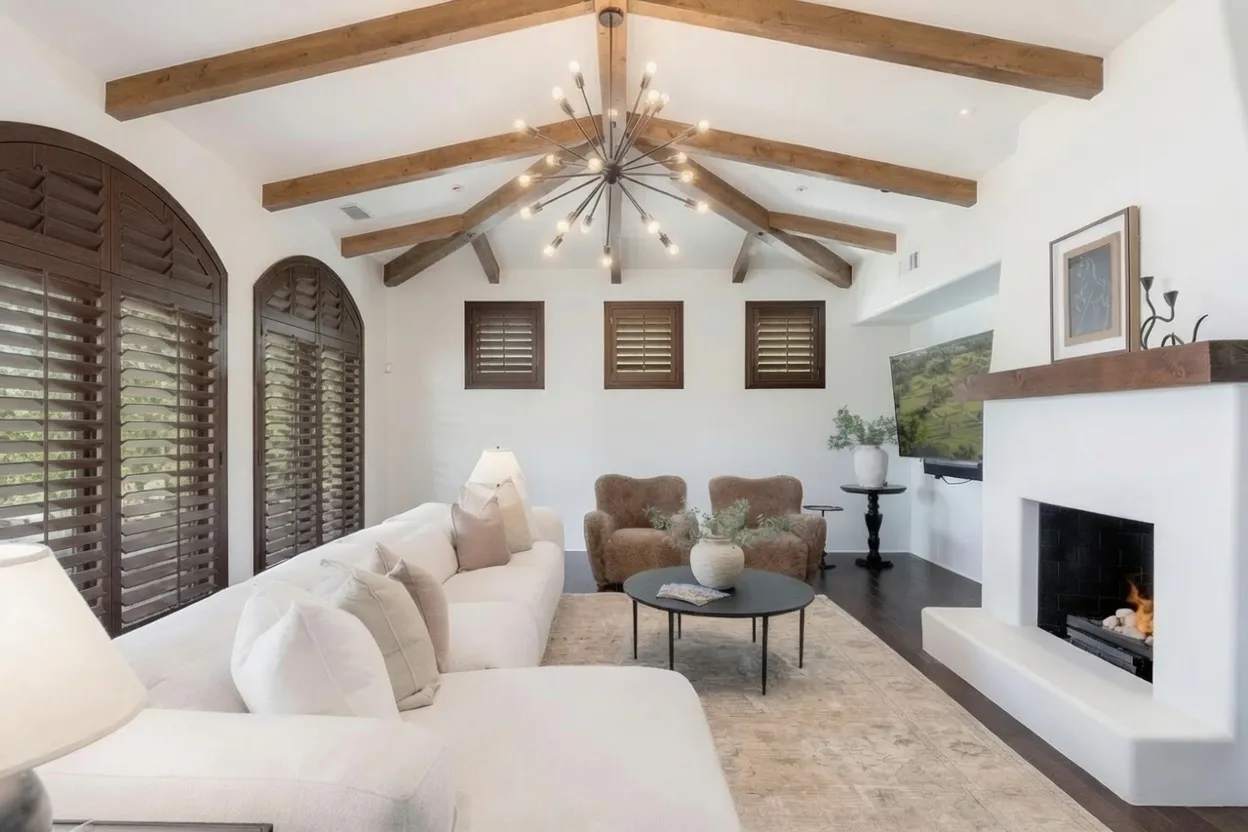
Painted wood exists for the customer whose color vision is specific: the deep charcoal that matches the steel windows, the heritage green of a restoration, the exact tone the designer specified. If polymer’s palette covers your color, choose polymer and skip the aging risk. If it doesn’t, painted wood is the vehicle — with eyes open that wood’s movement eventually telegraphs through paint at the joints, and touch-ups are part of long-term ownership.
Placement: Protecting the Finish You Chose
Whichever finish brings you to wood, placement decides how long you’ll love it. The rule is the same one from the material comparison: keep wood off the west- and south-facing glass, where heat and UV run its aging fastest, and give it the rooms Arizona treats gently — shaded exposures, interior-facing spaces, conditioned formal rooms. The classic pattern in the homes we design: polymer carrying the house, stained wood starring in the dining room, study, or wherever the millwork called for it.
What Arizona homeowners say
“I couldn't be happier with Southwest blinds. We were having such a difficult time choosing our window treatment so we contacted Southwest and we are so glad we did. Sarah and Kelley came out for our consultation and spent a great deal of time reviewing our options until we narrowed it down to what we were looking for.”
“Without question we are happy to give a 5-star rating. Rob worked with us to ensure we had the best window treatments for our second home. We live out of state and he worked with us personally every step of the way from product selection to installation. We couldn't be happier with the product and service.”
Frequently asked questions
Can you stain polymer shutters?
No - polymer comes in factory painted finishes only. Stain is the one finish that requires wood, and it's the main reason wood stays in the conversation at all.
Does stained wood fade in Arizona?
On sun-facing windows, yes - fading and finish wear are how stained wood ages here, along with the warping risk all wood carries. Placement on shaded and interior-facing windows is how you protect the finish.
Can stained shutters be refinished?
It's possible but genuinely laborious - every louver, both sides, edges. Practically, most aged stained shutters get replaced rather than refinished, which is another argument for placing them out of the sun from day one.
Should I match my shutters to my floor stain?
Match the undertone, then decide the depth deliberately - exactly matching can read flat, while a coordinated shade lighter or deeper usually looks more intentional. Judge on a real louver sample in your room's light.
Is painted wood better than polymer?
For standard whites and neutrals, no - polymer gives the identical painted look without wood's Arizona aging, which is why it's our default. Painted wood earns its place only when the color you need falls outside the polymer palette.
Where should stained shutters go in a house?
Shaded, interior-facing, conditioned rooms - dining rooms, studies, formal spaces - ideally where they're matched to cabinetry or millwork. Keep them off west- and south-facing glass.
Bring us the color
Finish decisions are sample decisions. At the consultation we bring stain and paint samples to your actual light, your actual millwork, your actual floors - and map where wood belongs and where polymer should carry the load.
Serving the Phoenix Valley from our Gilbert, Peoria, and Scottsdale showrooms.