
Plantation Shutters vs. Blinds: Which Is Better for Arizona Homes?
This is the first comparison most homeowners make, and the price tags frame it unfairly from the start: blinds look like the sensible choice and shutters look like the splurge. Stretch the timeline to how long you'll actually own the home, add Arizona sun and dust to the equation, and the math flips. We sell and install both, so we don't need to spin this - here's the honest version.
The quick verdict
Blinds win the day you buy them. Shutters win every year after that. Blinds cost meaningfully less upfront, and for rentals and short-horizon budgets that settles it - that's their honest lane. For a home you own and plan to keep, shutters are the better investment, and it isn't close: they insulate the window around the clock against Arizona heat, survive kids, pets, and sun that leave blinds warped and faded, add value that buyers and listings actually name, and deliver worry-free ownership for 20+ years while a set of blinds gets replaced two or three times over the same span. Price the whole ownership period instead of the checkout line, and the "expensive" option is usually the cheaper one.
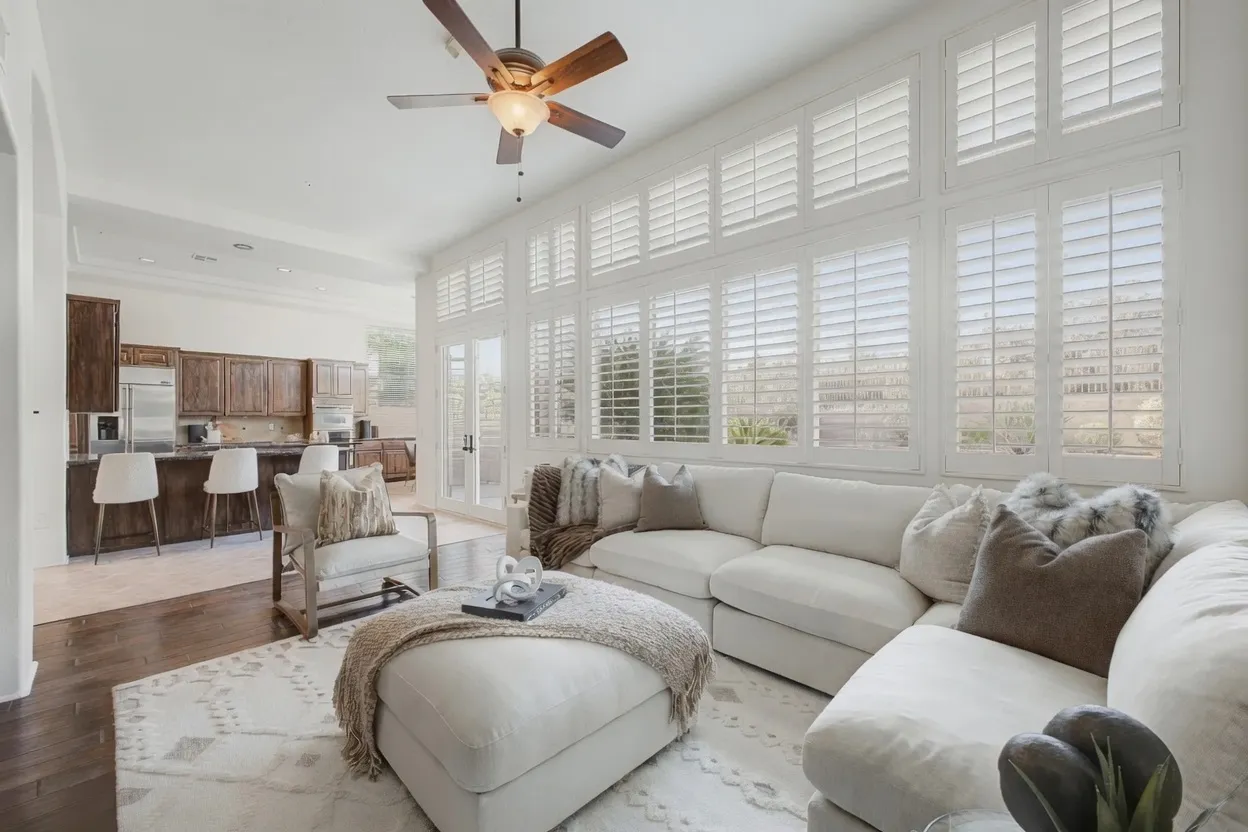
Side-by-side comparison
| Factor | Plantation Shutters | Blinds |
|---|---|---|
| Upfront cost | Higher - a real investment | Lower - the entry-level choice |
| Cost over 15-20 years | One purchase, done | Replaced two or three times as slats warp, fade, and mechanisms fail |
| Insulation / cooling | Rigid panel + dead-air pocket, working around the clock | Minimal - thin slats with air gaps do little against heat gain |
| Arizona sun | Polymer shrugs it off | Sun-side slats warp, yellow, and go brittle |
| Kids & pets | Rigid panels, no cords | Bent slats, snapped tilt wands, cords (a real safety issue with corded models) |
| Dust & monsoon cleaning | Wipe the louvers | Every slat, both sides - the chore everyone abandons |
| Light control | Louver-precise, tight closure | Tilt control, but light bleeds at edges and between slats |
| Operation & feel | Solid, quiet, furniture-grade | Lightweight; rattles in the breeze from an open door |
| Resale | Permanent fixture - named in listings, conveys as an upgrade | Neutral at best; aged blinds read as a to-do item |
| Look | Architectural, custom, built-in | Utility covering |
| Best role | Owned homes, long horizon | Rentals, flips, short-term budgets |
What does each really cost over 15 years?
Here’s the reframe this whole decision needs: you’re not comparing two price tags — you’re comparing one purchase against a subscription.
Blinds in Arizona age on a schedule. Sun-facing slats warp and yellow. Cords fray, tilt mechanisms strip, wands snap. Kids and pets accelerate all of it. Most homeowners quietly replace blinds every five to ten years — sooner on west-facing windows — which means over the life of one shutter installation, the “cheap” option gets bought two or three times, with the shopping, measuring, and installing repeated each round. Shutters are bought once. They’re operating identically in year fifteen, and the only maintenance in between is dusting.
Then add the cooling side: every Arizona summer, a shutter’s rigid panel and dead-air pocket are insulating the glass — the exact place summer heat enters — while thin blind slats do close to nothing. That’s a utility-bill difference that compounds across every cooling season you own the home.
We’re not going to invent a fake dollar figure for your house — window count and exposures change the math. But the shape of it is consistent: the gap you pay at purchase gets repaid in replacements you skip and cooling you don’t buy.
Where Blinds Are the Honest Answer
Fair is fair — blinds have a real lane:
- Rentals. Tenant turnover is hard on window treatments; blinds are the right cost for the risk.
- Flips and short horizons. If you’re selling within a couple of years, blinds cover the glass for the photos — though note which product listing agents actually brag about (it isn’t blinds).
- Covering every window today on a tight budget. Blinds get the whole house covered now. Just go in knowing you’ve bought the first round of a repeating purchase, not a finished decision — and consider doing the front-facing rooms in shutters and phasing the rest.
A slider with vertical blinds is its own conversation entirely — here’s that page.
What You’re Actually Buying With Shutters
The blind is a covering; the shutter is part of the house. That distinction runs through everything: the louver dial that meters Arizona’s low western glare without darkening the room, the tight closure for bedrooms, the panel that a dog’s nose and a toddler’s grip can’t destroy, the wipe-down cleaning after a dust storm instead of a slat-by-slat ordeal — and the line on the listing sheet when you sell, because “plantation shutters throughout” is one of the few window-treatment phrases that moves buyers. It’s the same worry-free ownership argument that runs through everything we install: buy the thing that removes future problems, once.
Which is right for your home?
The home you plan to keep
Shutters. This is the exact situation the total-cost math favors most.
West- and south-facing rooms
Shutters, urgently - this is where blinds die fastest and where insulation pays daily.
Kids' rooms and pet zones
Shutters - no cords, nothing to bend, nothing to snap.
A rental property
Blinds, without apology. Right tool, right job.
"I want shutters but the whole-house number is steep."
Phase it - front elevation and main rooms first, bedrooms next. We design phased projects regularly, and the house reads intentional at every stage.
What Arizona homeowners say
“My husband and I had over 40 windows that were covered with old pink vertical blinds and worn shades when we moved into our home a couple of months ago. We decided to look for shutters to update the look of our home. ... The shutters themselves are of excellent quality, are the best we have ever had and we have had quite a few in our various houses.”
“I've used Southwest Blinds & Shutters a couple of times over the previous 3 years and have always been impressed. My shutters from the original install still look brand new and I couldn't be more impressed.”
Frequently asked questions
Are shutters worth the extra cost over blinds?
For a home you own and plan to keep, yes - and the math is the reason: one shutter purchase typically outlasts two or three rounds of blinds while insulating the window every summer in between. For rentals and short horizons, blinds are the honest answer.
Do shutters add home value?
They're one of the few window treatments that do - a permanent fixture that conveys with the home and gets named in listings. Blinds are neutral at best, and aged blinds read as a project for the buyer.
Do shutters keep a house cooler than blinds?
Meaningfully. A shutter's rigid panel and trapped-air pocket insulate the glass around the clock; thin blind slats with air gaps do very little against Arizona heat gain. On west-facing windows the difference is felt daily.
How long do blinds last in Arizona?
Sun exposure sets the clock - warping, yellowing, and brittle slats commonly show within five to ten years, faster on western exposures, while mechanisms and cords fail on their own schedule. Shutters run 20+ years without any of it.
Are blinds or shutters better with kids and pets?
Shutters, decisively - rigid panels with no cords, nothing to bend or snap. Blinds lose slats and wands to exactly the daily life kids and pets bring.
Can I mix blinds and shutters in one house?
Yes, and phased projects do it deliberately - shutters on the front elevation and main rooms first, remaining rooms upgraded over time. Front-facing consistency is what matters from the street.
Run your own numbers
Bring your window count and your horizon - a free in-home consultation prices the whole house, maps a phased plan if you want one, and gives you the shutters-vs-blinds answer for your rooms, straight.
Serving the Phoenix Valley from our Gilbert, Peoria, and Scottsdale showrooms.