
Plantation Shutters vs. Motorized Shades: Automation, Cost & Performance
This comparison isn't like the others, because these two products aren't really fighting for the same windows. Shutters are the permanent, insulating architecture of a window. Motorized shades are sun management you can schedule, on glass you may not even be able to reach. The homeowners asking this question usually own the kind of home that needs both - so instead of picking a winner, this page shows you which windows each one wins in an Arizona home.
The quick verdict
Shutters for the main living spaces; motorized shades for the glass shutters can't practically serve. Shutters win where you live: bedrooms, living areas, offices - permanent insulation, louver-precise light control, and worry-free ownership that no powered product can match. A poly shutter lasts as long as anything in your home with zero upkeep beyond dusting; it operates correctly from day one and never needs charging, programming, or service. Motorized shades win three specific battles shutters can't fight: hard-to-reach glass (clerestories, two-story walls, high transoms), wide spans (multi-panel sliders and patio walls), and automation - shades that close themselves against the west sun at 3 PM whether you're home or not. In most Arizona homes we design, this isn't either/or. It's shutters as the backbone and motorized shades deployed like a tool, exactly where their advantages are real.
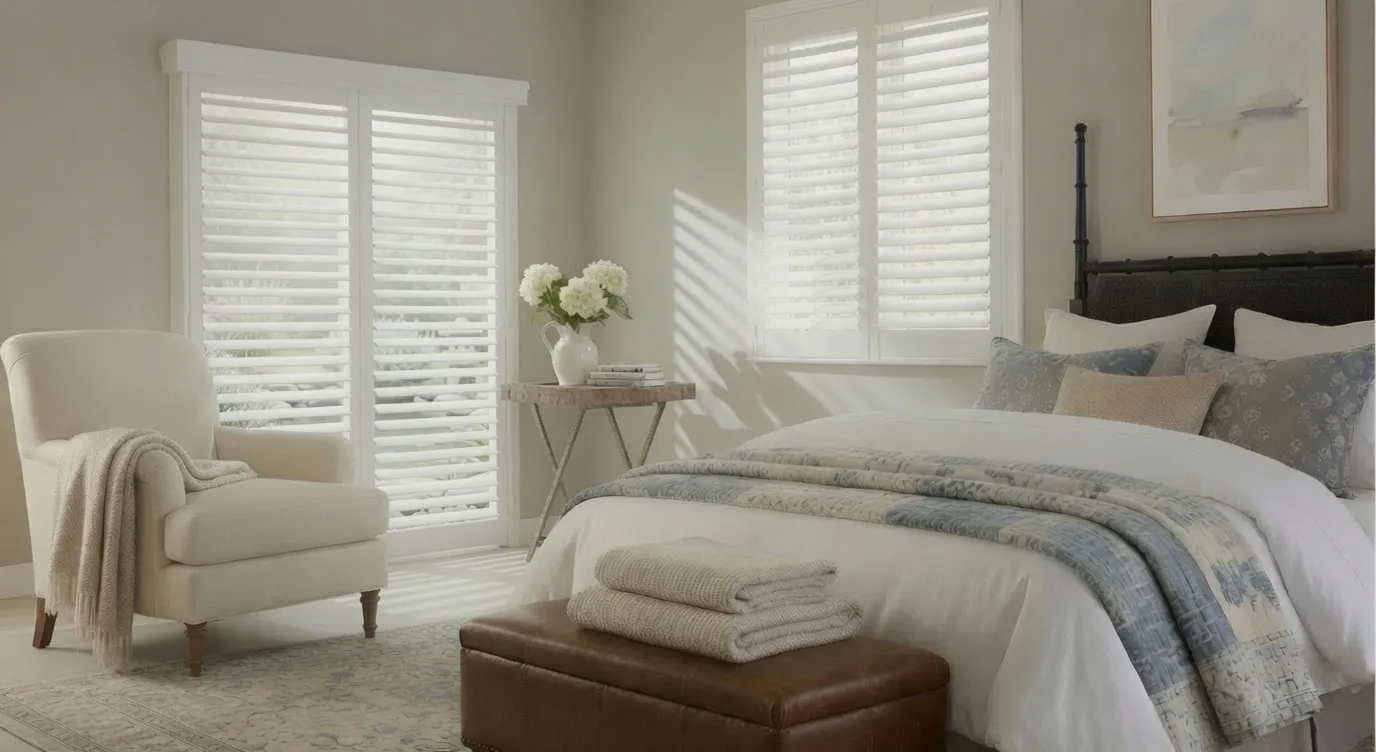
Side-by-side comparison
| Factor | Plantation Shutters | Motorized Shades |
|---|---|---|
| Automation & scheduling | None (manual louvers) | Full - schedules, remotes, voice, smart-home scenes |
| Insulation | Excellent - rigid panel + dead-air pocket, constant | Good (cellular fabrics) but only while lowered |
| High & hard-to-reach glass | Impractical | The purpose-built answer |
| Wide spans (sliders, patio walls) | Multiple panels, heavy operation | Effortless - one motor, any width |
| Light control precision | Louver-precise, any angle | Raise/lower positions; fabrics filter or block |
| Maintenance | None beyond dusting | Batteries to recharge or wiring at install; motors serviceable |
| Power | None needed | Hardwired, rechargeable battery, or solar options |
| Long-term ownership | Worry-free - lasts as long as anything in the home, dusting only | A device you own: charging cycles, motor service life, fabric replacement |
| Lifespan | 20+ years | Fabric 5-10 years; motors typically shorter than shutters |
| Kid & pet safety | No cords | No cords (motorization eliminates them) |
| Resale value | Permanent fixture, conveys as an upgrade | Adds smart-home appeal; treated more as equipment |
| Upfront cost | Higher per standard window | Higher than manual shades; varies with motor and size |
| Best use case | Bedrooms, living areas - the whole-home backbone | Clerestories, sliders, view walls, west-sun automation |
What does automation actually do for Arizona heat?
Outside Arizona, motorized shades sell on convenience. Here, the killer feature is different: they manage heat on a schedule, without you.
The hottest hours of an Arizona afternoon usually happen while nobody’s home to do anything about them. A motorized shade on a west-facing wall can drop automatically at 2 or 3 PM every day of summer, block the worst of the solar load, and rise again for the evening view — no habit required, no forgetting, no coming home to a superheated great room. Tie it to a smart-home schedule or a sun sensor and your window treatments become part of the cooling strategy instead of decoration.
Shutters counter with a different kind of always-on: their insulation doesn’t depend on position or programming. A shutter is doing its rigid-barrier, dead-air work around the clock, and tilted louvers manage glare while still letting the room live in daylight. That’s why the two pair so well — constant baseline insulation from the shutters, scheduled strike-force shading where the sun hits hardest.
Which windows can’t shutters practically serve?
An honest shutter company will tell you where shutters aren’t the answer:
High glass
Clerestory windows, two-story foyer glass, transoms above 10 feet — even if you could mount shutters there, you could never operate them. Motorization exists for exactly this.
Wide sliders and patio walls
Arizona floor plans love the 12-to-16-foot multi-panel slider. Shutters here mean a train of panels to fold and unfold every time you use the door. One motorized shade spans it and disappears at the touch of a button.
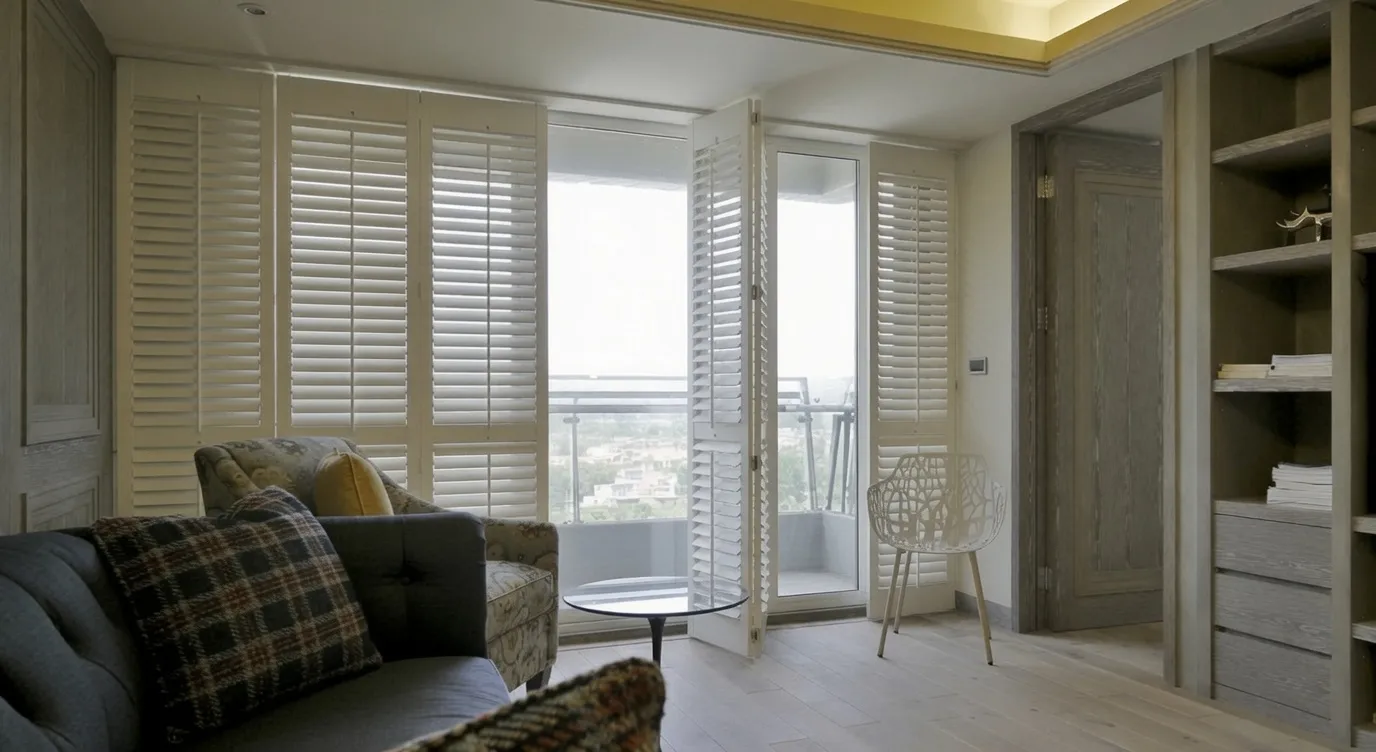
The view wall you want to disappear
Shutters frame a view; a retracted shade vanishes entirely. When the whole point of the glass is the mountains, a solar or blackout shade that fully retracts preserves the architecture.
Which is easier to own for the long term?
Here’s the dimension where a polymer shutter isn’t just competitive with a motorized shade — it’s categorically superior: long-term ownership.
A poly shutter lasts as long as anything in your home. Zero maintenance, zero upkeep, beyond occasional dusting. It never needs charging, programming, pairing, or troubleshooting — it operates correctly from the day it’s installed, the same way, for decades, because it’s extremely durable and there’s nothing in it to fail. It’s the last decision you’ll ever make about that window.
A motorized shade, however good, is a device you own: batteries to recharge on a cycle, motors with a service life, remotes and integrations to keep working, fabric that ages faster than the home around it. None of that is a dealbreaker on the windows where motorization genuinely earns its keep — but it’s a real cost of ownership, and it’s why we don’t motorize by default. For the standard, reachable windows where you actually live — bedrooms, family rooms, offices, baths — the shutter gives you louver-precise light control, always-on insulation, and total freedom from ever thinking about it again. Motorization is a tool for the windows that need it, not a default for the ones that don’t.
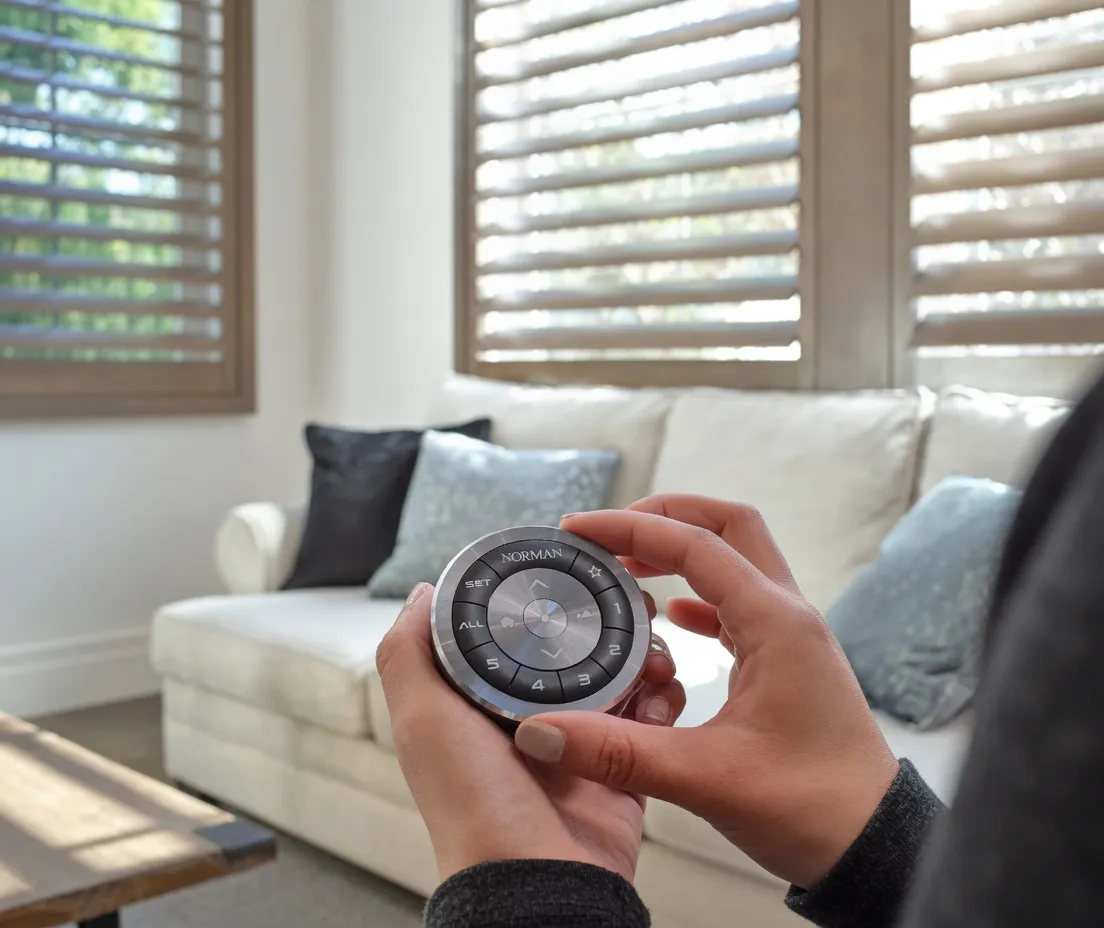
Which is right for your home?
Single-story home, standard windows
Shutters throughout. There may be nothing here motorization meaningfully improves.
Great room with a two-story window wall
The classic combination: shutters on the lower, reachable glass; motorized shades on the upper glass, on a west-sun schedule.
16-foot slider to the patio
Motorized shade - one span, one button - with shutters on the room's other windows.
West-facing home office that bakes every afternoon
Shutters for daily light control, and if the heat load is serious, a motorized solar shade layered outside-the-frame that drops on schedule during peak sun.
The smart-home build
Motorized shades wherever automation earns its keep, shutters as the permanent layer - designed together so the home reads as one intentional system, not two competing ones.
What Arizona homeowners say
“My husband and I cannot say enough about how amazing our new automatic interior and exterior shades are. ... They also took time at the end to go over setting it up so we could use the remotes or Google Home and answered any questions we had. THANK YOU for making our summer much more enjoyable and our house cooler than ever.”
“I had my motorized roll down shades installed on my patio recently. Love the shades and the look. ... They were very neat and explained everything about our new shades and how they work. This is the second time we made a major purchase from Southwest and both installations were great.”
Frequently asked questions
Are motorized shades worth it?
On the right windows, absolutely: high glass, wide sliders, and west-facing exposures where scheduled closing manages heat while you're away. On standard reachable windows, the motorization premium buys convenience you may rarely use - which is why we spec it by window, not by default.
Can shutters be motorized?
Motorized louver tilt exists, but it's a niche option - shutters are fundamentally a manual product, and that's part of their appeal: nothing to power or program. If automation is the priority for a window, a motorized shade is the purpose-built answer.
What's better for high windows?
Motorized shades, and it isn't close. Glass you can't reach needs a treatment you don't have to touch.
Do motorized shades need an outlet?
Not necessarily - options include hardwired power (cleanest for new construction), rechargeable battery motors (typical for retrofits), and solar charging on sun-facing windows. We'll match the power approach to each window at the consultation.
Do motorized shades need maintenance?
They're a powered product, so yes: battery motors recharge on a cycle, motors have a service life, and fabric ages faster than the home. It's manageable - but it's a real difference from a poly shutter, which needs nothing but occasional dusting for as long as you own the house.
Which insulates better for Arizona summers?
Shutters, as a constant: rigid panel and trapped air working around the clock. Cellular motorized shades insulate well while lowered - and scheduling helps ensure they actually are lowered during peak heat. The strongest setup uses both: shutters as baseline, scheduled shades on the hardest exposures.
Can you combine shutters and motorized shades in one room?
Yes - it's one of our most common high-end designs: shutters on the reachable glass, motorized shades above or over the sliders, chosen together so colors and lines read as one design.
Design the whole-home combination
Because we design and install both, the consultation isn't about picking a side - it's a window-by-window plan: shutters where permanence wins, motorization where it earns its keep, and one design language across all of it.
Serving the Phoenix Valley from our Gilbert, Peoria, and Scottsdale showrooms.