
Shutters vs. Vertical Blinds: Upgrading the Slider Every Arizona Builder Ignored
If you're reading this, there's a wall of vertical blinds somewhere in your house that you've stopped seeing - until it clatters, or a vane snaps off, or the chain jams, and you remember the builder's decision you never made. Verticals are the default on nearly every Arizona slider for one reason: they're the cheapest thing that technically covers the glass. Here's what they actually cost you, and every path out.
The quick verdict
Vertical blinds are a placeholder that most Arizona homes are still living with. They clatter in the breeze from the door they're supposed to serve, drop vanes one by one, seal light poorly, and visibly date a room - and because builders install them everywhere, replacing them is one of the highest-impact upgrades a room can get. The architectural upgrade is a shutter built for sliders - bypass panels that glide on a track, or bifold panels that fold clear - bringing the slider up to the same permanent, worry-free standard as the rest of a shuttered home. For the widest spans, or when you want the glass to go completely bare at the touch of a button, a motorized shade is the other path. Either way, the verticals' one real virtue - being cheap - is the thing you stop caring about the day they're gone.
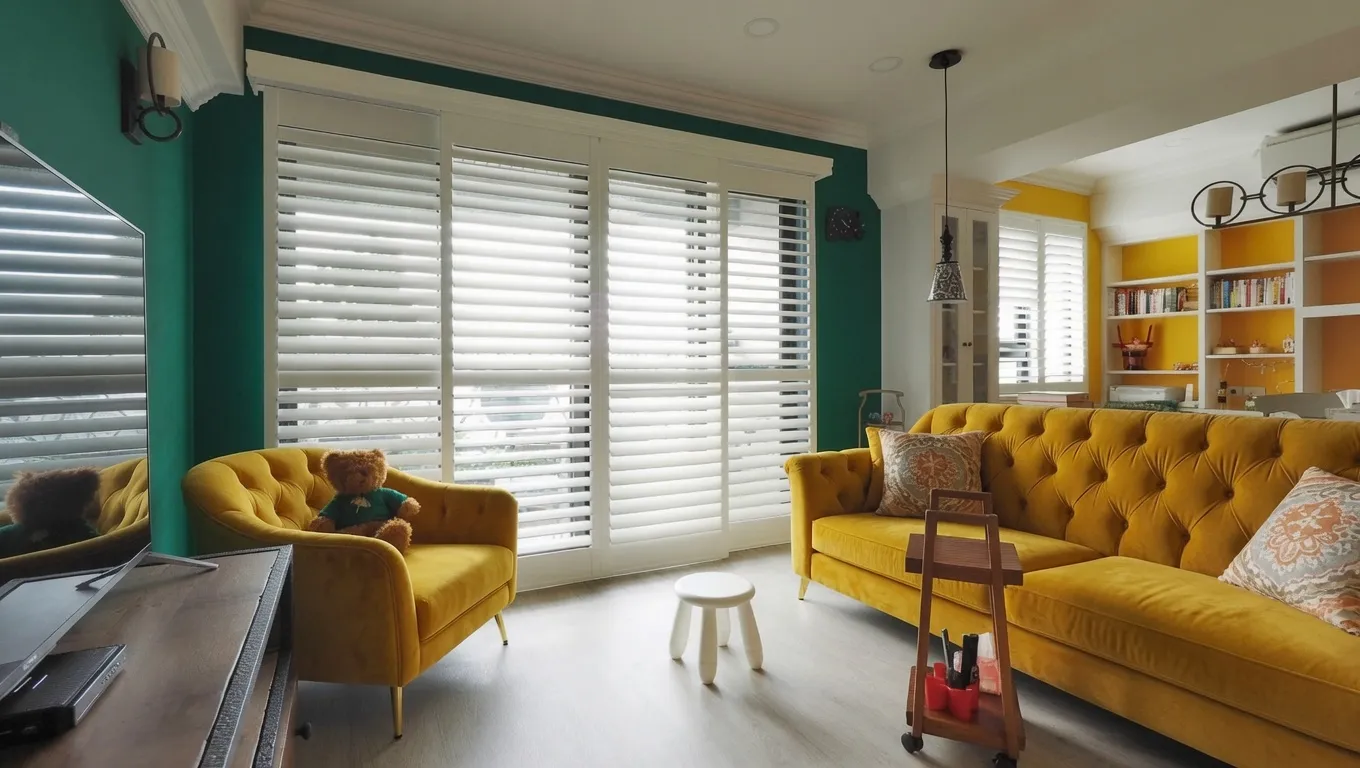
Side-by-side comparison
| Factor | Slider Shutters (Bypass / Bifold) | Vertical Blinds |
|---|---|---|
| Look | Architectural, permanent, custom | The builder default; visibly dates a room |
| Durability | Decades, worry-free | Vanes snap, clips break, chains jam |
| Operation | Panels glide or fold - smooth, quiet | Clatter, tangle, drag across the floor track |
| Light control | Louver-precise, even with panels closed | Rotate or open - coarse, with light strips between vanes |
| Light seal | Tight louver closure | Gaps at every vane, glow at the edges |
| Wind tolerance (open door) | Rigid panels, unbothered | The signature clatter, every time |
| Kid & pet safety | No cords or chains | Cords/chains; low-hanging vanes invite damage |
| Cleaning | Wipe the louvers | Dust settles on and between every vane |
| Resale | Reads as an upgrade | Reads as "original builder condition" |
| Cost | Meaningful investment | Cheap to buy, cheap-looking to live with |
| Best role | The permanent slider solution | Rentals and placeholders |
Why Verticals Fail the Door They’re Built For
The irony of vertical blinds is that they perform worst at the exact thing a slider does: opening. Slide the door on a spring evening and the breeze turns the vanes into a wind chime nobody wanted. Walk through with your hands full and you’re swimming through plastic. Over time the failure mode is always the same — vanes snap at the clip, one at a time, leaving the gap-toothed look that says original condition to every guest and every future buyer.
And Arizona adds its own tax: sun-side verticals fade, warp, and go brittle, and the light strips between vanes let the western glare through in stripes. They’re not bad products so much as minimum products — chosen by a builder to hit a line item, not by anyone who was going to live behind them. (If that selection logic sounds familiar, it’s the same story as big-box shutters.)
Path One: Shutters Built for Sliders
Yes, shutters go on sliding doors — and purpose-built configurations solve the operation question:
Bypass shutters hang from a top track and glide past each other like the door itself — panels slide aside for traffic, and closed, they give the slider the same louvers, light control, and clean lines as every window in the room. Bifold shutters fold and stack to the side, clearing more of the opening when you want the whole doorway.
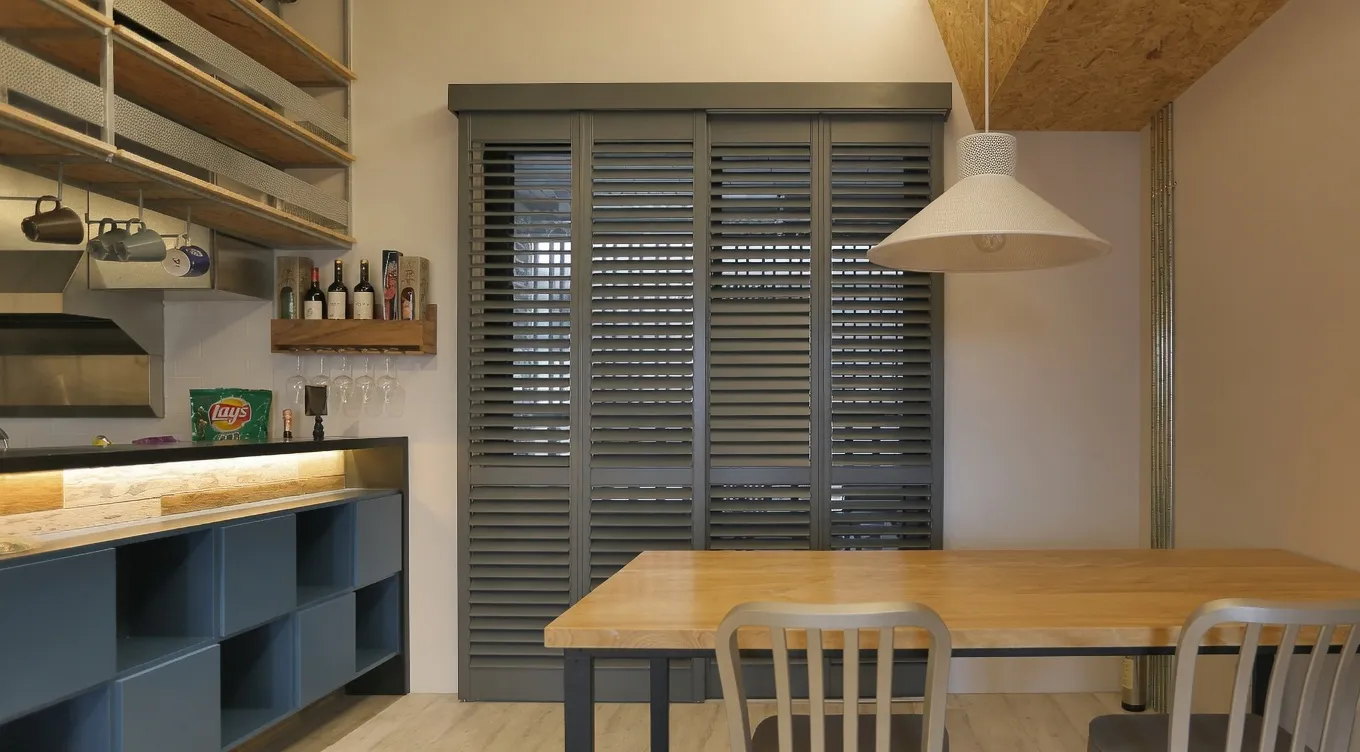
Either way, the slider stops being the wall the design skips. Louvers dial the afternoon glare off the floor, closure is tight enough for real light control, there’s nothing to clatter, snap, or tangle — and it’s the same worry-free ownership as every other shutter in the house: decades of service, dusting only.
The honest limit: shutter panels frame the opening rather than vanishing. If your goal is glass that goes completely bare — the patio view with nothing in the way — that’s the next path.
Path Two: The Motorized Shade
For the widest spans — the 12-to-16-foot multi-panel slider, the pocket door that opens a whole wall — one motorized shade covers everything with a single motor, and fully retracted, it disappears entirely. Add a schedule and it also becomes west-sun defense, dropping at peak heat whether you’re home or not. (The full shutters vs. motorized shades comparison.)
The trade is the one that always comes with motorization: it’s a device you own — charging, motor life, fabric aging — where the shutter is a one-time decision. Which is why the split usually falls along a simple line: shutters for standard sliders in rooms the shutters already anchor; motorized shades for the oversized spans and the disappear-completely goal.
Which is right for your slider?
Standard two-panel slider in a shuttered room
Bypass shutters - the room reads as one design instead of stopping at the door.
Family room slider with kids and dogs through it all day
Shutters. Rigid panels shrug off the traffic that destroys vanes, and there are no cords or chains.
The 16-foot wall of glass to the patio
Motorized shade - one span, one button, gone when you want the view.
West-facing slider that heats the room every evening
Either path beats verticals badly; shutters for the louver dial, or a scheduled motorized shade if the span is big - the full west-facing comparison covers the playbook.
Rental property
Keep the verticals. This is their lane.
What Arizona homeowners say
“My husband and I had over 40 windows that were covered with old pink vertical blinds and worn shades when we moved into our home a couple of months ago. We decided to look for shutters to update the look of our home. ... The shutters themselves are of excellent quality, are the best we have ever had and we have had quite a few in our various houses.”
“I had shutters installed in my living room, dining room, and den along with bifold shutters on my patio doors. They are beautiful! Kudos to Southwest Shutters. I want to absolutely be sure to mention that Todd, Josh, and Dominic did an amazing job installing my new shutters. They are skilled, professional, and did spectacular cleanup job. Thank you guys so very much!”
Frequently asked questions
What can I replace vertical blinds with?
The main upgrades: bypass or bifold shutters (the permanent, architectural answer), a motorized shade (the wide-span, disappear-entirely answer), or panel-track fabric verticals (a softer refresh that keeps the vertical operation). For most Arizona homes, slider shutters are the choice that upgrades the room.
Can you put shutters on a sliding door?
Yes - bypass shutters glide on a track like the door itself, and bifold shutters fold clear. Both are purpose-built for sliders and give the door the same louver control as the rest of the home's windows.
What's a bypass shutter?
Shutter panels hung from a top track that slide past one another - open, they stack aside for traffic; closed, they cover the slider with full louver control. It's the most popular shutter configuration for sliding doors.
Why do builders install vertical blinds?
Cost. They're the cheapest product that technically covers a slider, chosen to hit a construction line item - not by anyone planning to live behind them.
Do vertical blinds lower home value?
They don't subtract dollars so much as signal "original builder condition" - while shutters on the same opening read as a custom upgrade that conveys with the home.
Are vertical blinds bad in the heat?
Sun-side verticals fade, warp, and go brittle, and the gaps between vanes stripe western glare into the room. They age faster in Arizona than almost anywhere.
Retire the clatter
Bring us the slider - we'll measure it, show you bypass and bifold samples against your actual opening, and price the motorized option alongside, so you pick the path with everything in front of you.
Serving the Phoenix Valley from our Gilbert, Peoria, and Scottsdale showrooms.